The landscape of home security is constantly evolving, with smart locks leading the charge in blending convenience with cutting-edge protection. As established giants continue to innovate, new contenders frequently emerge, promising to redefine what we expect from our front door. Among these, Next Lock has surfaced as a notable new entry, aiming to capture the market with its blend of features.
This comprehensive review delves into Next Lock, examining its functionalities, performance, and how it measures up against the current leaders in the smart lock arena. We’ll explore its strengths, acknowledge areas for improvement, and guide you through whether this “new contender” is the right choice to safeguard your home.
What is Next Lock, and Why Should You Consider It?
Next Lock represents the latest generation of digital door locks designed to enhance home security and daily convenience through advanced technology. At its core, a smart lock like Next Lock replaces traditional keys with a variety of digital access methods, integrating seamlessly into a modern smart home ecosystem. This shift offers unparalleled control and peace of mind for homeowners, renters, and even property managers.
 Next Lock smart lock showing multiple access methods like fingerprint, keypad, and app control.
Compared to conventional deadbolts, Next Lock provides a multitude of advantages. It eliminates the need for physical keys, reducing the risk of loss or unauthorized duplication. Instead, it offers flexible access options such as fingerprint recognition, custom passcodes, keycards, and remote control via a smartphone app. This multi-faceted approach to entry not only boosts security but also simplifies access management for family, friends, or service providers. Its applications are broad, making it a valuable addition to private residences, vacation rentals, and small offices seeking an upgrade in access control.
Next Lock’s Core Features: A Deep Dive
Next Lock positions itself as a versatile smart lock, packed with features designed to offer flexible and secure entry. Understanding these core functionalities is key to appreciating its potential as a new market challenger.
Biometric Fingerprint Access
|
Our Picks for the Best Smart Lock in 2026
As an Amazon Associate I earn from qualifying purchases.
|
||
| Num | Product | Action |
|---|---|---|
| 1 | TEEHO TE001 Keyless Entry Door Lock with Keypad - Smart Deadbolt Lock for Front Door with 2 Keys - Auto Lock - Easy Installation - Oil-Rubbed Bronze |

|
| 2 | eufy Security Smart Lock C220, Fingerprint Keyless Entry Door Lock, Built-in Wi-Fi, App Remote Control, Front Door Smart Lock Deadbolt, 8Months Battery, Reliable Power, IP53 Waterproof, BHMA Grade 3 |
|
| 3 | TEEHO TE001 Keyless Entry Door Lock with Keypad - Smart Deadbolt Lock for Front Door with 2 Keys - Auto Lock - Easy Installation - Satin Nickel |
|
| 4 | Philips Wi-Fi Door Lock, WiFi Smart Lock Keyless Entry Deadbolt for Front Door, Compatible with Alexa & Google Assistant, Remote Control, Built-in WiFi, APP Fingerprint Passcode Unlock, Auto Locking |
|
| 5 | TEEHO TE001 Keyless Entry Door Lock with Keypad - Smart Deadbolt Lock for Front Door with 2 Keys - Auto Lock - Easy Installation - Matte Black |
|
| 6 | Electronic Passwords Keyless Entry Door Locks Smart Deadbolt Metal Lock Auto Time Delay Locking Secure Durable Low Battery Alert Type-C Port for Emergency Charging |
|
| 7 | ULTRALOQ U-Bolt Pro WiFi Smart Lock with Door Sensor, 8-in-1 Keyless Entry Door Lock with Fingerprint ID, App Remote Control, Built-in WiFi Keypad Deadbolt, Auto Unlock, IP65 Waterproof, Easy Install |
|
| 8 | Schlage Encode Smart WiFi Deadbolt Lock for Front Door - Keyless Entry with App or Touchscreen - Works with Alexa, Hey Google, & Airbnb - Create Codes for Guests - Matte Black |
|
| 9 | Philips Wi-Fi Door Lock, WiFi Smart Lock Keyless Entry Deadbolt for Front Door, Remote Control, Built-in WiFi, APP Fingerprint Passcode Unlock, Auto Locking |
|
| 10 | eufy Security Smart Lock C220, Fingerprint Keyless Entry Door Lock, Built-in Wi-Fi, App Remote Control, Front Door Smart Deadbolt, IP53 Waterproof, 8-Months Battery, Nickel |
|
One of Next Lock’s standout features is its integrated fingerprint scanner, offering swift and keyless entry with just a touch. This biometric method provides a high level of security and convenience, ensuring that only authorized individuals can unlock the door. While many users praise its responsiveness for adults, some have noted inconsistencies when used by children, suggesting that smaller or developing fingerprints might require a few attempts. Despite this, the overall speed and ease of use for primary users are often highlighted as significant advantages.
Keypad & Passcode Entry
Beyond biometrics, Next Lock includes a robust digital keypad, allowing for multiple custom passcodes. This feature is particularly useful for temporary access, such as for guests, dog walkers, or maintenance staff, where unique codes can be generated and managed directly from the app. The keypad is generally reported as intuitive and easy to program, offering a reliable backup to fingerprint access and a straightforward solution for those who prefer numerical entry.
Smart App Control & Remote Management
The cornerstone of any modern smart lock is its accompanying mobile application, and Next Lock is no exception. Through its dedicated app, users can lock and unlock their door remotely, grant temporary access, view activity logs, and manage user profiles. This remote capability provides significant peace of mind, allowing users to control their door from anywhere. However, some early adopters have expressed a desire for more consistent and reliable notifications regarding door status, indicating that the app’s real-time alert system could benefit from further refinement. The user interface, while functional, has also been mentioned as needing “smoothing around the edges and transitions” for a more polished experience.
Keycard & Mechanical Key Backup
For added flexibility and as a contingency, Next Lock supports keycard entry. These physical cards provide another quick and convenient access method, ideal for distributing to family members or frequently returning guests. Crucially, the system also retains a traditional mechanical key override, ensuring that you always have access to your home, even in the event of a power outage or a completely drained battery. This layered approach to access methods underscores Next Lock’s commitment to both modern convenience and fail-safe reliability.
Connectivity & Smart Home Integration
Next Lock primarily utilizes Bluetooth for direct communication with your smartphone, enabling local control and setup. For remote access and advanced features like real-time notifications (which, as noted, are an area for potential improvement), a Wi-Fi bridge or gateway is typically required, or it may have built-in Wi-Fi capabilities. For a new contender, robust smart home integration is vital. While specific integrations can vary, an ideal new smart lock aims for compatibility with popular ecosystems like Amazon Alexa, Google Assistant, and Apple HomeKit, allowing it to be part of a larger connected home automation strategy.
Unpacking the Pros and Cons of Next Lock
Every new product has its strengths and weaknesses, and Next Lock, as an emerging player, is no different. A balanced understanding of its advantages and disadvantages is crucial for an informed decision.
The Advantages of Choosing Next Lock
Next Lock offers several compelling benefits that make it an attractive option for modern homeowners. Its most frequently praised aspect is the ease of installation. Many users report that the lock can be installed in as little as 30 minutes, a significant plus for DIY enthusiasts. The versatility of access options—fingerprint, keypad, keycard, and app control—provides users with multiple convenient ways to enter their home, catering to different preferences and situations. This multi-method approach also inherently enhances security, offering layers of protection beyond a traditional key. Reviewers often note that the lock generally “works great” and provides a sense of enhanced control over home access, positioning it as a capable smart home security device.
Potential Drawbacks and Areas for Improvement
Despite its strengths, Next Lock does have a few areas where it could improve to solidify its position as a top-tier contender. The most notable concern raised by users is the inconsistency of the fingerprint scanner for children’s fingers. While it performs reliably for adults, smaller or developing fingerprints sometimes struggle with recognition, which can be a point of frustration for families. Another frequently mentioned issue is the reliability of remote notifications. Users have reported not always receiving alerts on their phones when the door is locked or unlocked, a feature critical for remote monitoring and peace of mind. Additionally, while the app is functional, some feedback suggests the app’s user experience needs refinement, specifically “smoothing around the edges and transitions” to match the seamlessness of more established smart lock interfaces.
How Next Lock Stacks Up: Comparison with Leading Brands
To truly assess Next Lock’s position as a “new contender,” it’s essential to compare its offerings against some of the market’s leading smart lock brands like Ultraloq, Yale, and August.
| Feature / Brand | Next Lock | Ultraloq U-Bolt Pro WiFi | Yale Assure Lock 2 | August Wi-Fi Smart Lock (4th Gen) |
|---|---|---|---|---|
| Access Methods | Fingerprint, Keypad, Keycard, App, Key | Fingerprint, Keypad, App, Key, Voice, Magic Shake | Keypad (Touchscreen/Button), App, Key | App, Key (retains existing deadbolt), Voice |
| Connectivity | Bluetooth (Wi-Fi via hub/built-in) | Built-in Wi-Fi, Bluetooth | Bluetooth (Wi-Fi via module) | Built-in Wi-Fi, Bluetooth |
| Smart Home Integration | Varies (potential for major platforms) | Alexa, Google Assistant, HomeKit | Alexa, Google Assistant, HomeKit, SmartThings | Alexa, Google Assistant, HomeKit, SmartThings |
| Security Rating | Good (based on multi-method access) | ANSI Grade 1 (High security) | ANSI Grade 2 (Good security) | ANSI Grade 2 (Good security) |
| Installation | Relatively Easy (DIY-friendly) | Moderate (full deadbolt replacement) | Moderate (full deadbolt replacement) | Very Easy (retrofit existing deadbolt) |
| User Experience | Good, but app/notification refinement needed | Excellent (versatile, reliable) | Very Good (sleek design, responsive) | Excellent (seamless auto-unlock) |
| Unique Selling Point | Multi-method access with fingerprint focus | Maximum versatility with biometric and voice | Robust design with premium touchscreen options | Retrofit design, auto-unlock, guest access management |
Next Lock offers a strong set of core access methods, aligning with or even surpassing some in versatility by combining fingerprint, keypad, and keycard options. Its ease of installation is a clear advantage over some full-replacement models. However, its current limitations in app notification reliability and potential inconsistencies with certain fingerprint types suggest it still has ground to cover to match the polished user experience and robust smart home integrations offered by more established brands like Ultraloq and August. These leaders often boast tighter integration with a wider range of smart home ecosystems and more consistent performance across all features.
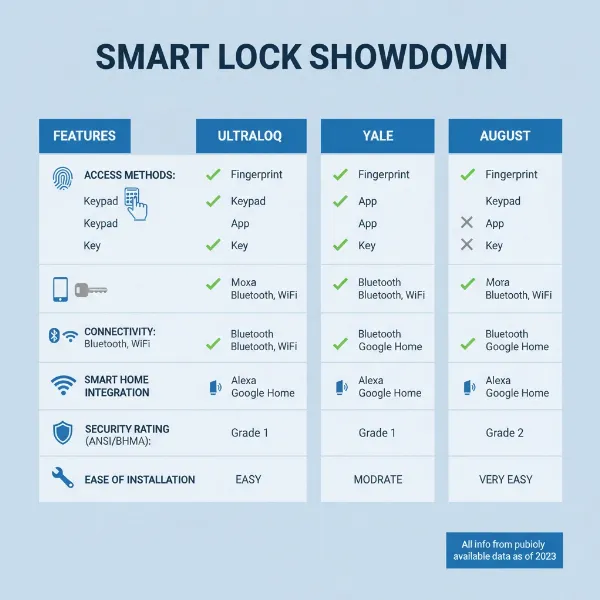 Infographic comparing features of Next Lock with other leading smart lock brands for home security.
Your Guide to Choosing the Right Smart Lock (Including Next Lock)
Selecting the ideal smart lock for your home requires careful consideration of several factors. Whether you’re eyeing Next Lock or exploring other options, this guide will help you make an informed decision that aligns with your specific needs and preferences.
Assess Your Security Needs
Begin by evaluating your current security concerns. What type of door do you have (wood, metal, sliding)? What level of security are you aiming for (basic convenience, robust protection against intrusion)? Do you need to manage access for many people (family, guests, service providers)? Your answers will help determine the necessary security grade (ANSI Grade 1 or 2) and features required.
Evaluate Access Methods
Consider which methods of entry are most important to you. Do you prioritize biometric fingerprint access for quick, keyless entry? Is a digital keypad essential for providing temporary codes to visitors? Do you prefer keycard access for ease of use or a robust smartphone app for remote control and monitoring? A smart lock like Next Lock offers multiple methods, but it’s important to weigh their individual reliability and your personal preference.
Smart Home Ecosystem Compatibility
For a truly integrated smart home, ensure your chosen smart lock can communicate with your existing ecosystem. Check for compatibility with platforms such as Amazon Alexa, Google Assistant, Apple HomeKit, or SmartThings. This integration allows for voice control, automation routines (e.g., lights turning on when you unlock the door), and unified control through a single app. While Next Lock shows promise, verify its current integration capabilities for your specific setup.
Installation & Durability
Ease of installation is a major factor. Some smart locks are retrofit solutions that work with your existing deadbolt (like August), while others, including Next Lock and many full-featured models, replace the entire deadbolt. Consider if you’re comfortable with a DIY installation or if professional help will be needed. Also, assess the lock’s build quality and durability. Look for robust materials and weather resistance, especially if the lock is exposed to the elements.
Battery Life & Backup Options
Smart locks run on batteries, so understanding their typical lifespan and replacement process is crucial. Most last several months to a year. Always look for reliable low-battery alerts and, importantly, a mechanical key override as a backup. This ensures you’ll never be locked out, even if the batteries completely die.
Budget Considerations
Smart locks range widely in price. Determine your budget and look for the best value that offers the features you need without unnecessary extras. Remember that a higher price often correlates with advanced features, premium materials, and broader smart home compatibility. Next Lock aims to offer a competitive feature set, but comparing its value against established brands is key.
Installation, Usage, and Maintenance Tips for Next Lock
Getting the most out of your Next Lock involves proper installation, understanding its smart functionalities, and diligent maintenance. These steps ensure optimal performance and longevity for your smart security system.
Basic Steps for Installing Next Lock
Next Lock is often praised for its relatively straightforward installation process, with many users reporting successful DIY setups within 30 minutes. Typically, installation involves removing your existing deadbolt, fitting the new deadbolt mechanism, and then attaching the interior and exterior components of the Next Lock. Precise alignment is crucial for smooth operation. Always refer to the detailed instruction manual provided with your lock, which will outline specific steps and any tools required. Ensure the door frame and strike plate are also properly aligned for the lock to engage correctly.
Maximizing Smart Features
Once installed, delve into the Next Lock app to unlock its full potential.
- Guest Access: Easily create and manage temporary passcodes or keycards for visitors. You can often set time limits for these codes, making them ideal for short-term rentals or service providers.
- Scheduling: Program automatic locking and unlocking schedules based on your daily routine. For instance, have the door automatically lock at night or unlock at a specific time in the morning.
- Monitoring Logs: Regularly check the activity log within the app. This feature tracks who enters and exits and when, providing a detailed record of your door’s activity.
- Remote Control: Familiarize yourself with locking and unlocking the door remotely. This is particularly useful if you need to let someone in when you’re not home or if you forget to lock up as you leave.
Maintenance & Troubleshooting
Like any electronic device, Next Lock benefits from regular care and awareness of common issues.
- Battery Management: Smart locks rely on batteries. Pay attention to low-battery warnings in the app or on the lock itself. Most locks use AA batteries, which are easy to replace. Always have a spare set on hand.
- Fingerprint Sensor Care: Keep the fingerprint sensor clean and free of dust or grime. A soft, dry cloth is usually sufficient. If you encounter issues with children’s fingerprints, try re-enrolling them with careful positioning or rely on other access methods for younger users.
- App Updates: Ensure your Next Lock app and the lock’s firmware are always up to date. Manufacturers frequently release updates to improve performance, add features, and patch security vulnerabilities.
- Addressing Notification Issues: If you experience unreliable notifications, first check your app settings to ensure all alerts are enabled. Also, verify your phone’s notification permissions for the Next Lock app. Ensure your Wi-Fi connection (if using a bridge or built-in Wi-Fi) is stable and that the lock has a strong signal. If problems persist, a quick search on the manufacturer’s support page or a call to customer service can often resolve specific connectivity issues.
Enhancing Your Next Lock Experience with Accessories
While Next Lock offers robust functionality out of the box, several accessories can further elevate your smart home security and convenience. Thoughtful additions can create a more integrated and user-friendly experience.
A primary accessory to consider, if not already integrated, is a Wi-Fi bridge or gateway. This device typically connects to your home Wi-Fi network and then communicates with your Next Lock via Bluetooth, enabling full remote access, real-time notifications, and deeper smart home integrations. Without it, your lock’s smart capabilities might be limited to within Bluetooth range.
For extended smart home automation, smart hubs (like those from Amazon, Google, or Apple) can tie Next Lock into a broader ecosystem, allowing for complex routines and voice control if the lock is compatible. Imagine telling your smart assistant to “lock the front door” or having your lights turn on automatically when the door unlocks.
Extra keycards or fobs are always useful, providing convenient backup access for family members or regular guests. Similarly, having a portable charger or an external battery pack can be a lifesaver for smart locks that feature a micro-USB or USB-C port for emergency power, allowing you to temporarily power the lock and use a passcode if the internal batteries die completely.
Finally, consider integrating your Next Lock with smart video doorbells or security cameras. Products like the MyQ Secure View Smart Lock, which combines a lock, doorbell, and camera, show the potential for a unified security front. Even without a combined unit, linking a compatible video doorbell allows you to see who is at your door before granting access remotely via your Next Lock app, adding another layer of security and convenience to your smart entry system.
Conclusion
Next Lock emerges as a promising “new contender” in the increasingly competitive smart lock market, offering an impressive array of access methods and user-friendly installation. Its multi-faceted approach, incorporating fingerprint, keypad, keycard, and app control, positions it as a versatile solution for modern home security. While it brings significant advantages in convenience and flexible access management, there are areas, particularly regarding fingerprint consistency for children and notification reliability, that could benefit from future enhancements to truly challenge the established leaders.
For those seeking an accessible, feature-rich smart lock that emphasizes multiple entry options and straightforward setup, Next Lock presents a compelling choice. As the technology continues to evolve, we anticipate further refinements that will undoubtedly strengthen its standing. Is Next Lock the definitive smart lock of tomorrow, or a stepping stone to an even smarter future? Only time, and user feedback, will tell.
Frequently Asked Questions
Is Next Lock easy to install for a DIY homeowner?
Yes, Next Lock is generally considered easy to install, with many users reporting successful self-installation within 30 minutes. It typically replaces your existing deadbolt and comes with clear instructions for a straightforward setup process, making it a good option for DIY enthusiasts.
Does Next Lock’s fingerprint scanner work reliably for children?
While Next Lock’s fingerprint scanner generally works well for adults, some users have noted inconsistencies with children’s fingerprints. It may require multiple attempts or specific positioning for smaller, developing fingers. For families, alternative access methods like passcodes or keycards might be more reliable for younger users.
Can I get remote notifications from Next Lock when my door is opened or closed?
Next Lock offers app-based remote control and monitoring. However, some user feedback indicates that the reliability of real-time notifications for door status (locked/unlocked) can be inconsistent. Ensuring strong Wi-Fi connectivity and checking app settings for alerts can help optimize this feature, but it’s an area noted for potential improvement.
Is Next Lock compatible with popular smart home systems like Alexa or Google Assistant?
Next Lock typically uses Bluetooth for local control, with remote access often enabled via a Wi-Fi bridge or built-in Wi-Fi. While it aims for broad smart home integration, specific compatibility with ecosystems like Amazon Alexa, Google Assistant, or Apple HomeKit can vary. Always verify the latest integration capabilities with the manufacturer.
What is the typical battery life of Next Lock, and does it have a backup?
The battery life of Next Lock, like most smart locks, typically ranges from several months to a year, depending on usage. It generally uses standard AA batteries. Crucially, Next Lock includes a mechanical key override, ensuring you can always access your home even if the batteries are completely drained.