Imagine a world where your hand isn’t just for greeting, but for granting access—a future where keys, codes, and even fingerprints are replaced by the unique map of veins beneath your skin. Palm vein scanning locks represent a significant leap in secure, convenient, and hygienic access control. This cutting-edge technology is quickly moving from high-security facilities into homes and businesses, promising an unparalleled level of protection and ease of use. Are you ready to discover how your palm can become the ultimate key to your security?
What Are Palm Vein Scanning Locks and Why Do They Matter?
Palm vein scanning locks are advanced biometric security devices that identify individuals by recognizing the unique pattern of veins within their palm. Unlike traditional keys that can be lost or stolen, or even fingerprints that can be smudged or replicated, palm vein technology reads internal, sub-dermal characteristics that are virtually impossible to forge. This method offers a touch-free, highly secure, and incredibly convenient way to manage access, transforming the concept of entry for residential, commercial, and high-security applications alike.
The Science Behind Palm Vein Recognition
At its core, palm vein recognition relies on sophisticated near-infrared (NIR) light technology. When you present your palm to the scanner, the device emits NIR light. Deoxygenated hemoglobin in your blood vessels absorbs this light, causing the veins to appear as a distinct, dark pattern against the lighter surrounding tissue. A high-resolution camera or sensor captures this unique internal map, which is then converted into a digital template.
This template is remarkably complex and distinct to each individual, even differentiating between identical twins. The internal nature of these patterns provides an extraordinary level of security, as they cannot be photographed, copied, or lifted from surfaces. The technology boasts extremely low False Acceptance Rates (FAR), often less than 0.00008%, and similarly impressive False Rejection Rates (FRR) of around 0.01%, ensuring both robust security and reliable access.
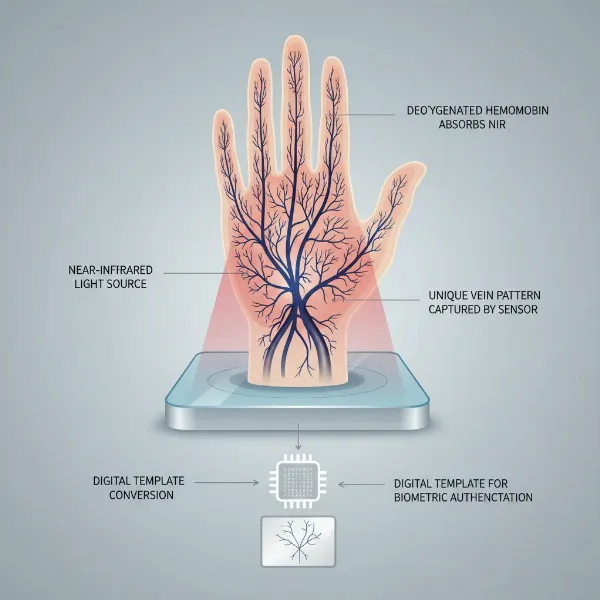 Diagram showing near-infrared light scanning a hand, revealing unique palm vein patterns for security.
Palm Vein Scanning Locks vs. Other Biometric Access Methods
While various biometric solutions exist, palm vein scanning technology offers distinct advantages over many of its counterparts.
Palm Vein vs. Fingerprint Locks
|
Our Picks for the Best Smart Lock in 2026
As an Amazon Associate I earn from qualifying purchases.
|
||
| Num | Product | Action |
|---|---|---|
| 1 | TEEHO TE001 Keyless Entry Door Lock with Keypad - Smart Deadbolt Lock for Front Door with 2 Keys - Auto Lock - Easy Installation - Matte Black |

|
| 2 | eufy Security Smart Lock C220, Fingerprint Keyless Entry Door Lock, Built-in Wi-Fi, App Remote Control, Front Door Smart Lock Deadbolt, 8Months Battery, Reliable Power, IP53 Waterproof, BHMA Grade 3 |
|
| 3 | Electronic Passwords Keyless Entry Door Locks Smart Deadbolt Metal Lock Auto Time Delay Locking Secure Durable Low Battery Alert Type-C Port for Emergency Charging |
|
| 4 | Philips Wi-Fi Door Lock, WiFi Smart Lock Keyless Entry Deadbolt for Front Door, Compatible with Alexa & Google Assistant, Remote Control, Built-in WiFi, APP Fingerprint Passcode Unlock, Auto Locking |
|
| 5 | eufy Security Smart Lock C220, Fingerprint Keyless Entry Door Lock, Built-in Wi-Fi, App Remote Control, Front Door Smart Deadbolt, IP53 Waterproof, 8-Months Battery, Nickel |
|
| 6 | ULTRALOQ U-Bolt Pro WiFi Smart Lock with Door Sensor, 8-in-1 Keyless Entry Door Lock with Fingerprint ID, App Remote Control, Built-in WiFi Keypad Deadbolt, Auto Unlock, IP65 Waterproof, Easy Install |
|
| 7 | Schlage Encode Smart WiFi Deadbolt Lock for Front Door - Keyless Entry with App or Touchscreen - Works with Alexa, Hey Google, & Airbnb - Create Codes for Guests - Matte Black |
|
| 8 | Philips Wi-Fi Door Lock, WiFi Smart Lock Keyless Entry Deadbolt for Front Door, Remote Control, Built-in WiFi, APP Fingerprint Passcode Unlock, Auto Locking |
|
| 9 | TEEHO TE001 Keyless Entry Door Lock with Keypad - Smart Deadbolt Lock for Front Door with 2 Keys - Auto Lock - Easy Installation - Satin Nickel |
|
| 10 | TEEHO TE001 Keyless Entry Door Lock with Keypad - Smart Deadbolt Lock for Front Door with 2 Keys - Auto Lock - Easy Installation - Oil-Rubbed Bronze |
|
Fingerprint locks have been a popular choice for smart homes, but they scan the surface of the skin. This makes them susceptible to issues like cuts, dirt, dry skin, or even wear and tear over time, which can lead to misreads or denied access. Moreover, fingerprints can potentially leave latent prints that, in theory, could be replicated. Palm vein locks, by contrast, scan internal patterns, rendering them immune to surface damage or dirt. They offer a touch-free experience, significantly improving hygiene, and capture ten times more unique data points than a single fingerprint, leading to enhanced security and reliability.
Palm Vein vs. Facial Recognition Locks
Facial recognition has gained traction, but it often struggles in varying light conditions, can be less accurate for certain demographics, and can even be fooled by high-quality photographs or masks. Concerns about passive scanning and privacy also persist, as faces are constantly exposed. Palm vein technology, however, requires a deliberate action (hovering the hand), making it privacy-by-design. It performs consistently in diverse environments, is nearly impossible to trick with external spoofing methods, and maintains a higher accuracy rate compared to facial recognition systems.
Palm Vein vs. Iris Recognition
Iris recognition offers high security and is contactless, reading the unique patterns in the eye’s iris. While highly effective, palm vein recognition provides a similar level of security and hygiene with a different user interaction that some find more natural and less intrusive. Both are advanced, internal biometrics, but palm vein often comes with the added benefit of simpler, more robust enrollment and a wider acceptance in various public and private settings due to its non-intrusive nature.
Leading the Charge: Key Players and Market Trends in Palm Vein Technology
The market for palm vein biometrics is experiencing rapid growth, with current estimates placing the global vein recognition smart lock market at approximately $450 million. Projections indicate a substantial expansion, expected to surpass $1.2 billion by 2030, demonstrating an impressive Compound Annual Growth Rate (CAGR) of over 11.5%. The broader palm vein biometrics market is forecast to reach $3.79 billion by the same year.
This surge is driven by increasing consumer demand for advanced security, the expanding smart home ecosystem, and ongoing technological innovations. While companies like ZKTeco and Hitachi have historically been significant players, newer brands such as Wyze, Philips (with models like the 5000 Series), Dessmann, and Luke are making considerable inroads. Once primarily confined to high-security installations in banking, healthcare, and government, palm vein technology is now becoming increasingly affordable and accessible for residential and commercial applications, signaling its transition into a mainstream security solution.
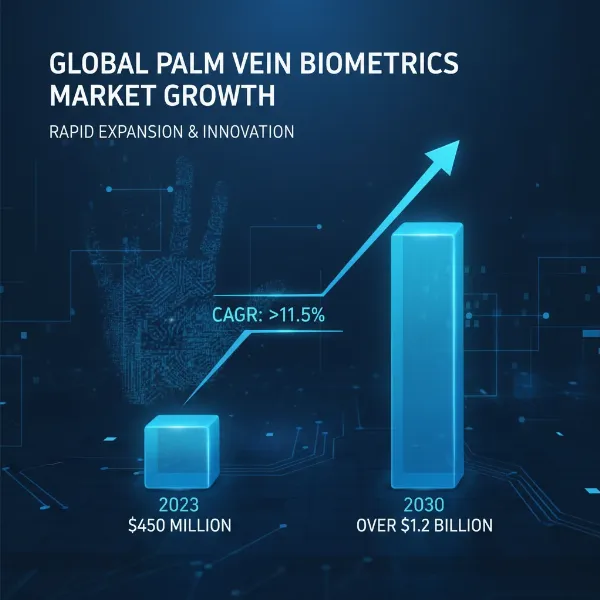 Graph illustrating the projected growth of the global palm vein biometrics market from current to 2030.
Choosing the Right Palm Vein Scanning Lock for Your Needs (Buying Guide)
Selecting the ideal palm vein scanning lock requires careful consideration to ensure it meets your specific security, convenience, and budgetary requirements.
Assessing Your Security Requirements and Door Type
First, determine the level of security you need. For a primary entrance or high-value assets, a lock with multi-factor authentication (e.g., palm vein plus a backup code or key) might be preferred. Consider your door type (wood, metal, glass, sliding) and existing lock mechanism to ensure compatibility. Some palm vein locks are designed for specific door thicknesses or handle types.
Essential Features to Look For
Look for features that enhance both security and usability. Connectivity options like Wi-Fi or Bluetooth allow for remote access control, monitoring, and integration with smart home systems (Alexa, Google Assistant). Backup access methods, such as physical keys or temporary PINs, are crucial in case of power outages or technical issues. Features like anti-spoofing technology, automatic locking, and tamper alarms add extra layers of protection.
Understanding Security Certifications and Encryption
Prioritize locks with recognized security certifications. Strong data encryption (e.g., AES-256) for your biometric templates and communication protocols is vital to protect your personal information. Always ensure the device processes and stores biometric data securely, preferably locally on the device or in an encrypted format.
User Reviews and Expert Opinions
Reading reviews from other users can provide valuable insights into real-world performance, ease of installation, and customer support. Expert reviews often highlight technical specifics and compare different models, helping you make an informed decision.
Reputable Providers and Warranty Support
Choose locks from established manufacturers known for their reliability and customer service. A comprehensive warranty and readily available technical support are essential for peace of mind, ensuring you have assistance if any issues arise.
Installing and Maintaining Your Palm Vein Smart Lock
Integrating a palm vein smart lock into your home or office is a straightforward process, though some steps benefit from careful attention.
Basic Installation Steps
While professional installation is always recommended for optimal security and performance, many palm vein locks are designed for DIY installation, replacing existing deadbolts. Typically, installation involves removing your old lock, mounting the new exterior and interior components, and connecting any necessary wiring for power and smart features. Detailed instructions are always provided by the manufacturer.
Getting Started: Registering Palm Vein Patterns and App Integration
Once physically installed, the next step is digital setup. This involves registering authorized users by having them hover their palm over the scanner to capture their unique vein pattern. Most modern palm vein locks integrate with a dedicated smartphone app, allowing you to manage users, monitor access logs, grant temporary access, and customize settings remotely.
Tips for Longevity and Troubleshooting Common Issues
To ensure the longevity of your palm vein lock, keep the scanner lens clean and free of obstructions. While robust, avoid exposing the unit to extreme weather conditions or direct impact. Common issues, suchs as temporary access failures, can often be resolved by re-calibrating the sensor, ensuring your hand is positioned correctly, or checking battery levels. Most apps also offer troubleshooting guides and direct support.
Enhancing Your Palm Vein Smart Lock System with Accessories
To maximize the potential of your palm vein smart lock, consider integrating it with useful accessories and smart home ecosystems.
These locks can seamlessly connect with popular smart home hubs and voice assistants like Amazon Alexa or Google Assistant, allowing for voice-controlled locking/unlocking and integrated security routines. Backup power solutions, such as battery packs or uninterruptible power supplies (UPS), ensure continuous operation during electricity outages. Additionally, remote management tools and advanced access logs, often built into companion apps, provide greater control and oversight, allowing you to grant temporary access to visitors or service providers from anywhere. These enhancements create a truly connected and fortified access system.
Conclusion
Palm vein scanning locks stand as a testament to the ongoing evolution of home security, offering a blend of unmatched protection, remarkable convenience, and superior hygiene. By leveraging the unique, internal blueprint of your palm’s veins, this technology transcends the vulnerabilities of older access methods, establishing itself as a robust, future-proof solution for safeguarding what matters most. As these sophisticated devices become more accessible and integrated into our daily lives, they are poised to redefine how we interact with our physical spaces. Are you ready to embrace this new era of effortless and impregnable security?
Frequently Asked Questions
Are palm vein patterns truly unique?
Yes, palm vein patterns are incredibly unique to each individual. Research, including studies by Fujitsu, confirms that these intricate vascular networks are distinct even between identical twins, making them an exceptionally reliable biometric identifier that is nearly impossible to replicate.
Can palm vein locks be bypassed or hacked?
Palm vein technology is highly resistant to spoofing and hacking. Because it scans internal patterns based on blood flow, it cannot be fooled by photographs, silicone replicas, or latent prints. This internal, live detection mechanism makes it significantly more secure than many other biometric methods.
How hygienic are palm vein scanning locks?
Palm vein locks are inherently more hygienic than touch-based systems like fingerprint scanners or keypads because they are completely contactless. Users simply hover their hand over the sensor, minimizing the spread of germs and making them ideal for health-conscious environments.
What happens if the power goes out?
Most palm vein smart locks are equipped with multiple backup access options, including traditional physical keys, battery power (which can last for months), and sometimes even emergency USB charging ports. This ensures you always have a way to access your property, even during a power outage.
How does temperature or hand condition affect performance?
Unlike surface biometrics, palm vein recognition is largely unaffected by external factors such as cuts, dirt, dry skin, or extreme temperatures. The internal vein patterns remain consistent and scannable, ensuring reliable performance in a wide range of conditions where other biometrics might fail.
Are palm vein locks expensive?
While initially a premium technology, the cost of palm vein scanning locks is becoming more competitive as adoption increases. Prices vary based on features, brand, and integration capabilities, but they are increasingly accessible for residential consumers seeking high-end security solutions.
What is the lifespan of a palm vein smart lock?
The lifespan of a palm vein smart lock typically matches or exceeds that of other high-quality smart locks, often several years, depending on usage, brand quality, and maintenance. Many components are designed for durability, and regular software updates can also extend the functional life.
