Imagine returning home after a long day, only to find your smart lock unresponsive to the biting cold or refusing to engage in sweltering heat. While smart locks offer unparalleled convenience and enhanced security, their performance in extreme weather conditions is a critical consideration for homeowners. Understanding how these advanced devices react to nature’s harshest elements—from sub-zero temperatures and heavy snow to scorching sun and intense humidity—is essential for ensuring your home remains secure and accessible year-round. This guide delves into the challenges smart locks face and how to choose and maintain a system that stands strong against any forecast.
What is a Smart Lock and Why Weather Matters?
A smart lock is an electromechanical lock designed to perform locking and unlocking operations on a door when it receives instructions from an authorized device using a wireless protocol and cryptographic key to execute the authorization process. Unlike traditional mechanical locks that rely solely on physical keys and tumbler systems, smart locks integrate electronic components, sensors, and wireless communication technologies to offer features like remote access, keyless entry via keypad or fingerprint, and integration with smart home ecosystems.
While traditional locks can also be affected by weather—such as metal components freezing or expanding, causing keys to stick or mechanisms to jam—smart locks introduce a new layer of vulnerability due to their electronic nature. Batteries, circuit boards, and sensitive biometric readers are all susceptible to the vagaries of extreme temperatures and moisture, potentially compromising the very security and convenience they promise.
The Impact of Extreme Cold on Smart Locks
Cold weather poses several significant challenges to the functionality and reliability of smart locks. Homeowners in regions experiencing harsh winters must be particularly aware of these potential issues.
Battery Performance Degradation
|
Our Picks for the Best Smart Lock in 2026
As an Amazon Associate I earn from qualifying purchases.
|
||
| Num | Product | Action |
|---|---|---|
| 1 | ULTRALOQ U-Bolt Pro WiFi Smart Lock with Door Sensor, 8-in-1 Keyless Entry Door Lock with Fingerprint ID, App Remote Control, Built-in WiFi Keypad Deadbolt, Auto Unlock, IP65 Waterproof, Easy Install |

|
| 2 | Schlage Encode Smart WiFi Deadbolt Lock for Front Door - Keyless Entry with App or Touchscreen - Works with Alexa, Hey Google, & Airbnb - Create Codes for Guests - Matte Black |
|
| 3 | eufy Security Smart Lock C220, Fingerprint Keyless Entry Door Lock, Built-in Wi-Fi, App Remote Control, Front Door Smart Lock Deadbolt, 8Months Battery, Reliable Power, IP53 Waterproof, BHMA Grade 3 |
|
| 4 | Philips Wi-Fi Door Lock, WiFi Smart Lock Keyless Entry Deadbolt for Front Door, Compatible with Alexa & Google Assistant, Remote Control, Built-in WiFi, APP Fingerprint Passcode Unlock, Auto Locking |
|
| 5 | Electronic Passwords Keyless Entry Door Locks Smart Deadbolt Metal Lock Auto Time Delay Locking Secure Durable Low Battery Alert Type-C Port for Emergency Charging |
|
| 6 | TEEHO TE001 Keyless Entry Door Lock with Keypad - Smart Deadbolt Lock for Front Door with 2 Keys - Auto Lock - Easy Installation - Matte Black |
|
| 7 | eufy Security Smart Lock C220, Fingerprint Keyless Entry Door Lock, Built-in Wi-Fi, App Remote Control, Front Door Smart Deadbolt, IP53 Waterproof, 8-Months Battery, Nickel |
|
| 8 | TEEHO TE001 Keyless Entry Door Lock with Keypad - Smart Deadbolt Lock for Front Door with 2 Keys - Auto Lock - Easy Installation - Satin Nickel |
|
| 9 | Philips Wi-Fi Door Lock, WiFi Smart Lock Keyless Entry Deadbolt for Front Door, Remote Control, Built-in WiFi, APP Fingerprint Passcode Unlock, Auto Locking |
|
| 10 | TEEHO TE001 Keyless Entry Door Lock with Keypad - Smart Deadbolt Lock for Front Door with 2 Keys - Auto Lock - Easy Installation - Oil-Rubbed Bronze |
|
One of the most frequent problems smart locks face in cold weather is a dramatic reduction in battery life and performance. Batteries generate electricity through chemical reactions, and these reactions slow down considerably in low temperatures. This leads to reduced power output, faster drainage, and a shorter overall lifespan for the battery. For instance, standard alkaline batteries lose efficiency more rapidly in freezing environments compared to lithium-based alternatives. This accelerated depletion can result in unexpected lockouts if battery levels are not regularly monitored and replaced.
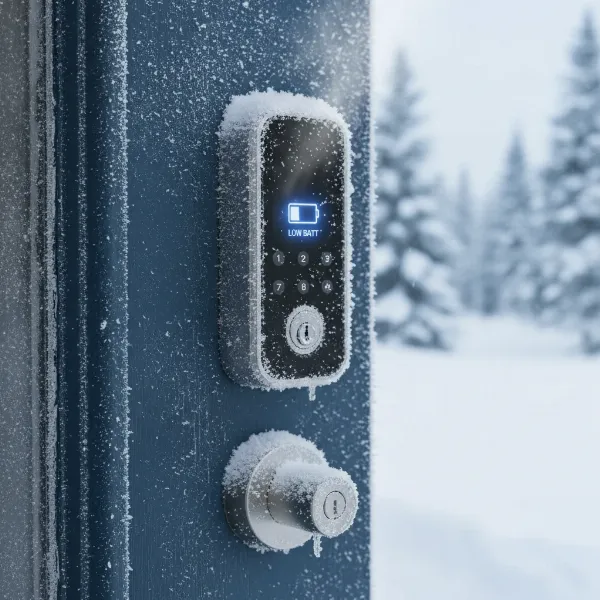 A smart lock on a frosted door with a dying battery indicator due to cold weather.
Fingerprint Scanner Challenges
Fingerprint recognition systems, popular for their quick and keyless entry, can become unreliable in extreme cold. Most fingerprint scanners operate by detecting electrical conductivity and subtle heat patterns from the skin. When temperatures drop, the electrical conductivity of the skin may decrease, making the sensor less responsive. Additionally, cold weather often leads to dry skin or, conversely, moisture and frost on the fingers, which can interfere with the sensor’s ability to accurately read and authenticate a fingerprint. Static electricity, more prevalent in dry winter air, can also interfere with these sensitive systems.
Keypad and Mechanical Stiffness
The physical components of smart locks are not immune to cold. As temperatures plummet, internal electronics and moving parts can become sluggish or completely unresponsive. Metal components may contract, leading to increased friction or tighter clearances within the lock mechanism, making it stiff or delayed in response. Any moisture around the lock can freeze, potentially blocking keypads, jamming internal latches, or making handles immovable, even for locks with exposed keyholes. Condensation, formed when warm indoor air meets a cold lock surface, can also freeze and create blockages.
Connectivity Issues
Wireless communication protocols like Bluetooth or Wi-Fi, often used by smart locks for remote control and integration, can also be affected by temperature fluctuations. In cold weather, the signal strength and range of these wireless connections may diminish, impacting the lock’s ability to communicate reliably with external devices or smart home hubs.
The Impact of Extreme Heat on Smart Locks
While often less discussed than cold weather effects, extreme heat can also compromise smart lock performance and longevity.
Battery Overheating and Damage
Just as cold can diminish battery life, excessive heat can cause batteries to overheat. This can lead to decreased efficiency, accelerated degradation, and, in severe cases, leakage or even bursting, especially if the lock (or its battery compartment) is exposed to direct sunlight. Modern lithium-ion batteries are generally more resilient but still have operating temperature limits.
Material Expansion and Mechanical Jams
High temperatures can cause materials, particularly door frames and the lock’s external components, to expand or swell. This expansion can put pressure on deadbolt mechanisms, causing them to stick or become difficult to operate. Misalignment between the door and the lock can also occur, hindering smooth locking and unlocking.
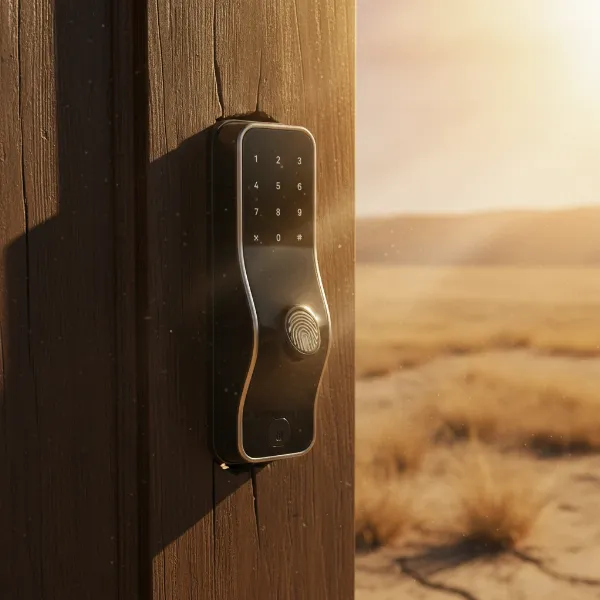 A smart lock on a sun-baked door showing signs of material expansion and potential jamming.
Electronic Component Stress
Sustained high temperatures can stress electronic components within the smart lock, potentially leading to malfunctions or premature failure. While specific details often vary by manufacturer and design, prolonged exposure to temperatures beyond a device’s rated operating range can degrade circuit boards and other sensitive parts.
Key Features for All-Weather Smart Locks
Choosing a smart lock that can withstand extreme temperatures requires careful consideration of its design and specifications. Look for features that enhance durability and functionality in challenging environments.
Wide Operating Temperature Ranges
The most crucial specification for an all-weather smart lock is its rated operating temperature range. Reputable manufacturers provide clear guidelines, with some models designed to function from as low as -31°F (-35°C) to as high as 158°F (70°C). Prioritize locks with a range that comfortably covers the most extreme temperatures your region experiences.
IP Weatherproofing Ratings
An Ingress Protection (IP) rating indicates a device’s resistance to dust and water. For outdoor smart locks, an IP rating of at least IP54 is recommended, offering protection against dust ingress and splashing water from any direction. Higher ratings like IP65 provide even greater assurance against dust and powerful water jets, which is beneficial for resisting heavy rain and snow.
Battery Type and Management
Opt for smart locks that use or are compatible with lithium batteries, as they generally perform better in cold conditions than alkaline batteries. Furthermore, a good smart lock should include low-battery alerts, notifying you well in advance when a replacement is needed. Some advanced models might even feature battery heaters, though these are less common.
Robust Construction and Materials
Look for locks constructed from durable materials, preferably with minimal plastic parts in exposed areas, to resist corrosion and structural degradation caused by temperature extremes and moisture. Locks designed for “marine grade” performance, for instance, are specifically built to withstand harsh coastal elements, including salt air.
Multiple Entry Methods with Mechanical Backup
Even the most robust smart lock can encounter an issue. Having multiple ways to unlock your door is crucial. This includes keypads, fingerprint scanners (if reliable in your climate), app control, and, most importantly, a physical key override. A mechanical keyhole provides a reliable backup in case of electronic failure, battery depletion, or extreme weather malfunctions, preventing inconvenient and potentially dangerous lockouts.
Top Smart Lock Brands for Harsh Climates
Several brands offer smart locks engineered with enhanced durability for extreme weather. When evaluating, focus on their specified temperature tolerance, IP ratings, and materials.
| Brand/Model Type (Examples) | Operating Temperature Range | IP Rating (Typical) | Key Features for Weather |
|---|---|---|---|
| Yale Real Living Lock | -22°F to 140°F (-30°C to 60°C) | Often IP54/IP55 | Rubber gasket for moisture/dust protection, tapered motorized deadbolt. |
| Schlage Encode Deadbolt | Outside: -31°F to 150.8°F (-35°C to 66°C); Inside: 14°F to 122°F (-10°C to 50°C) | Not always specified, but designed for harsh conditions | Exceeds industry certification, robust construction. |
| KeyInCode 5000 Series | (Specific ranges vary, often wide) | Designed for coastal climates | Larger buttons, acrylic keypads to deter salt penetration, no plastic parts. |
| ULTRALOQ U-Bolt Pro | (Not explicitly specified in search results for temp, but) | IP65 | Rugged shell for rain, snow, and heat. |
| DESLOC B200 | -22°F to 158°F (-30°C to 70°C) | IP54 | Waterproof and dustproof rating. |
| BE-TECH Smart Deadbolt | -35°C to 55°C (K3U), -20°C to 70°C (T170FMTL) | Not specified but designed for harsh weather | Durable for cold and heat, mechanical key backup. |
Note: Always verify specific model specifications directly from the manufacturer, as features and ratings can vary by product line and version.
Maintaining Your Smart Lock for Extreme Conditions
Proper installation and regular maintenance are crucial for ensuring your smart lock remains reliable, especially in challenging climates.
Proper Installation and Protection
Ensure your smart lock is installed correctly according to the manufacturer’s instructions, paying close attention to any weather-specific guidelines. If your lock is exposed to direct sunlight, consider adding an awning or an overhang to provide shade and reduce heat absorption. For cold environments, ensuring proper insulation around your door and sealing any gaps can help maintain a more stable temperature for the lock’s internal components.
Battery Maintenance
Regularly check your smart lock’s battery levels, especially before and during periods of extreme cold. Many smart locks offer in-app battery status notifications, which are invaluable for proactive replacement. Consider replacing batteries with fresh, high-quality lithium alternatives as winter approaches. Always keep spare batteries on hand for emergencies. Some locks also offer terminals for a 9V battery as a temporary power source if the main batteries die.
Sensor and Keypad Care
For fingerprint scanners, ensure your fingers are warm and dry before attempting to unlock the door in cold weather. Avoid thick hand creams or excessive moisture. Regularly clean the fingerprint sensor and keypad with a dry, soft cloth to remove dirt, dust, or ice buildup, which can impair functionality. In dry, cold conditions, static electricity can build up; touching a metal object before using the lock can help discharge it.
Troubleshooting Common Weather-Related Issues
If your smart lock malfunctions in extreme temperatures, a few steps can often resolve the issue:
- Check Batteries: This is the most common culprit. Replace them even if the low-battery warning hasn’t appeared yet.
- Physical Inspection: Look for ice, debris, or damage to the keypad, sensor, or moving parts. Gently clear any obstructions.
- Manual Override: Use the physical key if available.
- Reset: If all else fails, a system reset (following manufacturer instructions) can sometimes resolve electronic glitches.
- Contact Support: If the problem persists, reach out to the manufacturer’s support or a local locksmith specializing in smart locks.
Conclusion
Smart locks have undeniably transformed home security, offering unparalleled convenience and control. However, their sophisticated electronics and mechanical components require careful consideration when exposed to extreme cold and heat. By prioritizing models with robust temperature tolerance, superior weatherproofing, reliable battery management, and versatile entry options including a mechanical key backup, you can ensure your smart lock delivers dependable performance no matter the climate. Thoughtful selection and consistent maintenance are key to unlocking the full potential of your smart lock and safeguarding your home with confidence through every season.
What extreme weather challenges have you faced with your smart lock, and how did you overcome them?
Frequently Asked Questions
How do cold temperatures affect smart lock battery life?
Cold temperatures significantly reduce battery efficiency because the chemical reactions inside the battery slow down. This leads to faster battery drainage and reduced power output, potentially causing the smart lock to malfunction or become inoperable sooner than expected.
Can extreme heat damage a smart lock?
Yes, extreme heat can damage smart locks. High temperatures can cause batteries to overheat, potentially leading to leakage or reduced lifespan. Additionally, material expansion can cause mechanical parts to stick, and prolonged exposure can stress electronic components, affecting overall functionality.
What IP rating should I look for in a weatherproof smart lock?
For a weatherproof smart lock, an IP rating of at least IP54 is recommended, protecting against dust and splashing water. For even greater resistance to heavy rain, snow, and dust, consider models with an IP65 rating.
Do fingerprint smart locks work in freezing weather?
Fingerprint smart locks can struggle in freezing weather. Cold temperatures can reduce skin conductivity, and frost, moisture, or dryness on fingers can prevent accurate scanning, making the sensor less responsive.
Is a mechanical key backup essential for smart locks in extreme climates?
Yes, a mechanical key backup is highly essential for smart locks in extreme climates. It provides a crucial failsafe in case of battery failure, electronic malfunction, or weather-induced issues that render the digital entry methods unusable, preventing potential lockouts.
