A smart lock is more than just a keyless entry; it’s a sophisticated guardian for your home, blending mechanical reliability with advanced electronics. While these devices offer unparalleled convenience and security, many homeowners fall into the trap of a “set it and forget it” mentality. However, just like any other intricate piece of technology or a traditional lock, your smart lock requires regular care to function flawlessly and extend its lifespan. Neglecting simple maintenance tasks like lubrication and cleaning can lead to frustrating malfunctions, reduced responsiveness, and ultimately, compromise your home’s security. This comprehensive guide will walk you through the essential steps to keep your smart lock in pristine condition, ensuring it operates smoothly for years to come.
Why Smart Lock Maintenance is Essential for Longevity and Performance
Smart locks are marvels of modern engineering, combining traditional lock mechanisms with electronic components, sensors, and connectivity features. This intricate design means they have more points of potential failure if not properly maintained. Regular care goes beyond aesthetics; it’s about preserving functionality, ensuring security, and protecting your investment.
Neglecting your smart lock can lead to several problems. Dust, grime, and environmental factors can accumulate, causing mechanical parts to stick or seize. Electronic sensors can become less responsive, leading to delayed entry or recognition failures. Batteries might drain faster due to increased strain on the motor, and the lock’s overall lifespan can be significantly shortened. Proactive maintenance helps prevent these issues, ensuring your smart lock remains a reliable and efficient part of your smart home ecosystem.
The Right Tools and Materials for Smart Lock Care
Before you begin the maintenance process, gathering the correct tools and materials is crucial. Using the wrong products can cause damage to your smart lock’s delicate components or finish.
For Cleaning:
- Soft, lint-free microfiber cloths: Ideal for wiping surfaces without scratching.
- Mild dish soap and warm water: For gentle cleaning of the lock body. Avoid harsh detergents.
- Cotton swabs or soft-bristled toothbrush: For reaching small crevices and around buttons.
- Canned compressed air: Excellent for blowing dust out of keyholes, seams, and other tight spaces.
For Lubrication:
- Dry lubricant (e.g., powdered graphite): A traditional and effective choice for mechanical lock cylinders, as it doesn’t attract dirt.
- Silicone-based spray lubricant: Forms a protective barrier, repelling moisture and dust without attracting grime. Suitable for many smart lock mechanisms.
- PTFE (Teflon-based) lubricant: Creates a dry film, reducing friction and resisting dirt. Often comes in an aerosol with a straw applicator.
What to Avoid (and Why):
- Petroleum-based lubricants (e.g., conventional oil, grease): These can attract dust, dirt, and grime, leading to buildup that gums up the lock mechanism and can corrode internal components.
- WD-40 (as a lubricant): While WD-40 is an excellent water dispersant and cleaner, many experts advise against using it as a long-term lubricant for locks. Its residue can attract debris over time, leading to more issues. Some dry or PTFE-based WD-40 products are available, but always check the label carefully for “dry lubricant” or “PTFE.”
- Abrasive cleaners, harsh chemicals (alcohol, bleach, ammonia): These can damage the finish, corrode electronic contacts, and impair sensor functionality. Never use them on your smart lock.
- Rough scouring pads, scrapers: These will scratch the lock’s surface.
 Essential tools and materials for smart lock cleaning and lubrication, including cloths, lubricants.
Step-by-Step Guide: Cleaning Your Smart Lock
Regular cleaning is fundamental to smart lock maintenance, preventing dirt and grime from interfering with both mechanical and electronic functions. This process should be done carefully to avoid damaging sensitive components.
Surface and Exterior Cleaning
|
Our Picks for the Best Smart Lock in 2026
As an Amazon Associate I earn from qualifying purchases.
|
||
| Num | Product | Action |
|---|---|---|
| 1 | Philips Wi-Fi Door Lock, WiFi Smart Lock Keyless Entry Deadbolt for Front Door, Compatible with Alexa & Google Assistant, Remote Control, Built-in WiFi, APP Fingerprint Passcode Unlock, Auto Locking |

|
| 2 | Electronic Passwords Keyless Entry Door Locks Smart Deadbolt Metal Lock Auto Time Delay Locking Secure Durable Low Battery Alert Type-C Port for Emergency Charging |
|
| 3 | eufy Security Smart Lock C220, Fingerprint Keyless Entry Door Lock, Built-in Wi-Fi, App Remote Control, Front Door Smart Deadbolt, IP53 Waterproof, 8-Months Battery, Nickel |
|
| 4 | TEEHO TE001 Keyless Entry Door Lock with Keypad - Smart Deadbolt Lock for Front Door with 2 Keys - Auto Lock - Easy Installation - Satin Nickel |
|
| 5 | Schlage Encode Smart WiFi Deadbolt Lock for Front Door - Keyless Entry with App or Touchscreen - Works with Alexa, Hey Google, & Airbnb - Create Codes for Guests - Matte Black |
|
| 6 | TEEHO TE001 Keyless Entry Door Lock with Keypad - Smart Deadbolt Lock for Front Door with 2 Keys - Auto Lock - Easy Installation - Matte Black |
|
| 7 | TEEHO TE001 Keyless Entry Door Lock with Keypad - Smart Deadbolt Lock for Front Door with 2 Keys - Auto Lock - Easy Installation - Oil-Rubbed Bronze |
|
| 8 | Philips Wi-Fi Door Lock, WiFi Smart Lock Keyless Entry Deadbolt for Front Door, Remote Control, Built-in WiFi, APP Fingerprint Passcode Unlock, Auto Locking |
|
| 9 | ULTRALOQ U-Bolt Pro WiFi Smart Lock with Door Sensor, 8-in-1 Keyless Entry Door Lock with Fingerprint ID, App Remote Control, Built-in WiFi Keypad Deadbolt, Auto Unlock, IP65 Waterproof, Easy Install |
|
| 10 | eufy Security Smart Lock C220, Fingerprint Keyless Entry Door Lock, Built-in Wi-Fi, App Remote Control, Front Door Smart Lock Deadbolt, 8Months Battery, Reliable Power, IP53 Waterproof, BHMA Grade 3 |
|
Start by cleaning the main body of your smart lock. Use a soft, dry microfiber cloth to wipe away dust, fingerprints, and smudges from the exterior. For more stubborn dirt or residue, slightly dampen the microfiber cloth with warm water mixed with a small amount of mild dish soap. Gently wipe the surface, then follow up with a cloth dampened only with plain water to remove any soap residue. Finally, dry the entire surface thoroughly with a clean, dry cloth to prevent water spots and moisture ingress. Avoid spraying liquid directly onto the lock, as this can seep into electronic components.
Keypad and Touchscreen Care
Keypads and touchscreens are high-touch surfaces that accumulate dirt and oils quickly. For keypad models, use a slightly damp cloth to clean smudges and grime. For persistent dirt around buttons or in crevices, a cotton swab or a soft-bristled toothbrush can be effective. For touchscreens, a microfiber cloth is best. Gently wipe the surface to remove fingerprints and smudges. It is crucial to avoid harsh chemicals, alcohol, or ammonia-based cleaners, as these can damage the screen’s protective coating or affect its sensitivity.
Maintaining Fingerprint Sensors
Fingerprint sensors are highly sensitive and require meticulous care. Even a thin layer of dust or oil can impair their accuracy and responsiveness. Use a clean, dry microfiber cloth to gently sweep away any dust, smudges, or residue from the sensor’s surface. Avoid pressing down hard or using any wet solutions unless explicitly recommended by your smart lock’s manufacturer. If the sensor consistently struggles with recognition, ensuring it is impeccably clean is often the first troubleshooting step.
Cleaning the Mechanical Components (Keyhole, Latch, Deadbolt)
While smart locks offer keyless entry, most still feature a traditional keyhole as a backup. Dust and debris can accumulate inside the keyhole and around the latch and deadbolt mechanisms, causing stiffness or jamming. Use a can of compressed air to blow out any loose dust, dirt, or foreign particles from the keyhole and around the moving parts of the latch and deadbolt. For more stubborn internal grime in the key cylinder, a professional lock cylinder cleaning spray can be used, but generally, compressed air is sufficient for routine maintenance. Ensure these areas are clean before proceeding to lubrication.
Step-by-Step Guide: Lubricating Your Smart Lock
Lubrication is vital for the smooth operation of your smart lock’s mechanical components, reducing friction and preventing wear and tear. Choosing the right lubricant and applying it correctly is key to avoiding issues.
Preparing for Lubrication (Cleaning First)
Before applying any lubricant, ensure your smart lock’s mechanical components are thoroughly cleaned. Any existing dirt or grime, if mixed with lubricant, can create a sticky paste that exacerbates problems rather than solving them. Use compressed air to clear out the keyhole, and wipe down the latch and deadbolt mechanisms. A clean surface allows the lubricant to penetrate effectively and perform its function without hindrance.
Choosing the Correct Lubricant for Smart Locks
For smart locks, particularly those with delicate electronic components, selecting the appropriate lubricant is critical. Dry lubricants, such as powdered graphite, are often recommended for mechanical key cylinders because they do not attract dust or become gummy. For other moving parts, like the latch and deadbolt, silicone-based spray lubricants or PTFE (Teflon-based) lubricants are excellent choices. These create a dry, slick film that reduces friction, repels moisture, and does not attract dirt, making them safe for mechanisms near electronics. Always avoid petroleum-based oils, which can cause significant issues over time.
Applying Lubricant to Keyhole and Internal Mechanism
To lubricate the keyhole, use a dry lubricant like powdered graphite or a silicone/PTFE spray with a thin straw nozzle. Insert the nozzle directly into the keyhole and apply a small, controlled puff or spray. Afterwards, insert your physical key and turn it several times to distribute the lubricant evenly throughout the internal pin mechanisms. Remove the key and wipe off any excess residue. This process ensures the key turns smoothly and prevents the internal components from seizing.
Lubricating the Latch and Deadbolt
The latch and deadbolt are crucial moving parts that experience frequent friction. Apply a small amount of your chosen silicone or PTFE spray lubricant directly to the moving parts of the latch bolt and the deadbolt. Work the lock mechanism a few times (locking and unlocking) to help the lubricant penetrate all contact points. This will ensure that the latch retracts and extends smoothly, preventing sticking and reducing strain on the smart lock’s motor. Wipe away any drips or excess lubricant from the surface to keep the area clean.
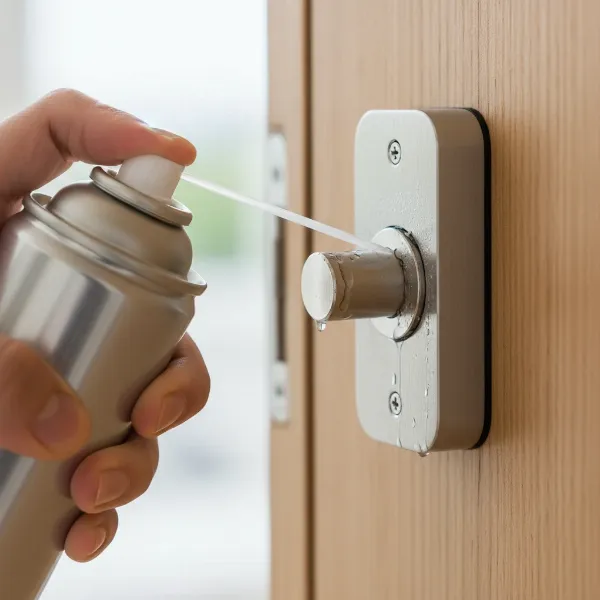 A hand applying silicone spray lubricant to a smart lock's deadbolt mechanism on a door.
Beyond Cleaning and Lubrication: Other Vital Maintenance Tips
While cleaning and lubrication are primary, a holistic approach to smart lock maintenance includes other crucial steps to ensure optimal performance and longevity.
Battery Management
Battery power is the lifeblood of most smart locks. Regular battery replacement is essential, typically every 6-12 months for dry batteries, even if no warning signs are present. Always use high-quality, compatible alkaline batteries as recommended by the manufacturer. Pay close attention to low battery alerts (beeping sounds or indicator lights) and replace batteries promptly to avoid being locked out. Ensure battery contacts are clean and corrosion-free, as poor contact can lead to inconsistent performance.
Firmware and Software Updates
Smart locks often rely on firmware and mobile app software for their advanced features and security. Regularly check for and install any available firmware updates via your mobile app or the manufacturer’s instructions. These updates often include performance enhancements, bug fixes, and critical security patches that protect your lock from vulnerabilities and improve overall functionality. Keeping your software updated is as important as maintaining its physical components.
Regular Inspections and Tightening Screws
Periodically conduct a visual inspection of your smart lock. Check for any visible wear, damage, or loose components, particularly the screws connecting the front and rear panels. Over time, constant use and door movement can cause screws to loosen. Use an appropriate screwdriver to gently tighten any loose screws. Ensure all parts of the lock cylinder, body, and handle are intact and securely fitted. Functionality testing, such as trying all access methods (fingerprint, keypad, app control), should be done monthly.
Weather Protection
Smart locks installed on exterior doors are exposed to various weather conditions, including rain, snow, heat, and humidity. Extreme temperatures can affect both mechanical parts and electronics. While you can’t control the weather, ensuring your door has adequate overhang or weatherstripping can help protect the lock. For locks in areas with harsh climates, more frequent lubrication and inspection may be necessary, especially before the onset of winter to prevent condensation and freezing.
Troubleshooting Common Smart Lock Issues Linked to Maintenance
Many common smart lock problems can be traced back to a lack of proper maintenance. Addressing these proactively can save you time and frustration.
Sticky or Jammed Mechanisms
A sticky or jammed latch or deadbolt is a classic sign of insufficient lubrication or debris buildup. After cleaning out any visible grime and applying the correct lubricant, the mechanism should move freely. If the issue persists, check for door alignment problems, as a misaligned door can put excessive pressure on the lock, causing it to stick.
Unresponsive Sensors/Keypads
If your smart lock’s keypad or fingerprint sensor becomes unresponsive, the first step is always to clean it thoroughly. Accumulated dirt, oil, or smudges can prevent accurate readings. For fingerprint sensors, ensure your finger is clean and dry. If cleaning doesn’t resolve the issue, check for firmware updates or consult your user manual for specific troubleshooting steps, as it could indicate a deeper electronic problem.
Premature Battery Drain
While sometimes a sign of a faulty circuit, premature battery drain can also result from the lock’s motor working harder due to friction in poorly lubricated mechanical parts. Regular lubrication reduces this strain, helping to extend battery life. If batteries still drain rapidly after ensuring proper lubrication and using high-quality batteries, it’s advisable to contact the manufacturer for a professional inspection, as there might be a short circuit or an internal component malfunction.
Conclusion
Your smart lock is a key component of your home’s security and convenience, and treating it with regular care is paramount to its long-term reliability. By consistently cleaning its surfaces, ensuring its sensors are clear, and properly lubricating its mechanical elements with the right products, you can prevent many common malfunctions and extend its lifespan significantly. Coupled with routine battery management, software updates, and general inspections, these simple maintenance steps will keep your smart lock performing optimally, providing you with seamless access and peace of mind. Are you ready to make smart lock maintenance a regular part of your home care routine?
Frequently Asked Questions
How often should I lubricate my smart lock?
It is generally recommended to lubricate your smart lock’s mechanical components at least once or twice a year, or more frequently if the lock is heavily used or exposed to harsh weather conditions. A good routine is to do it every six months, for example, when you change your clocks for daylight saving.
Can I use WD-40 to lubricate my smart lock?
While WD-40 is excellent for cleaning and displacing water, it is not recommended as a long-term lubricant for smart locks. Its residue can attract dust and grime, eventually gumming up the mechanism. Opt for dry lubricants like graphite powder, or silicone-based or PTFE (Teflon-based) sprays, which are designed to reduce friction without attracting debris.
What should I do if my smart lock’s fingerprint sensor isn’t working?
First, gently clean the fingerprint sensor with a dry microfiber cloth to remove any smudges, dirt, or oils. Ensure your finger is also clean and dry when attempting to unlock. If the issue persists, check for any available firmware updates for your smart lock, as software glitches can sometimes affect sensor performance.
How can I prevent battery drain in my smart lock?
To prevent premature battery drain, regularly replace batteries (every 6-12 months) with high-quality alkaline cells. Ensure the mechanical parts are well-lubricated to reduce motor strain. Also, check for loose wiring or a short circuit if batteries drain unusually fast, and update firmware to optimize power consumption.
