Smart locks offer unparalleled convenience, allowing keyless entry, remote access, and seamless integration with smart home systems. However, their advanced technology can sometimes overshadow a fundamental concern: physical security. A smart lock, regardless of its digital prowess, is only as secure as its physical components and the door it protects. Understanding and addressing potential physical vulnerabilities is crucial to truly safeguard your home. This guide will delve into how to reinforce your smart lock and surrounding entry points against brute force and tampering, ensuring robust protection for your property.
Understanding Smart Lock Physical Vulnerabilities
While smart locks excel in digital protection, they are not immune to physical attacks. Intruders may target weaknesses in the lock’s construction or the door assembly itself.
One significant vulnerability stems from weak build quality. Some smart locks utilize cheaper plastics or light metals in their construction, making them susceptible to basic tools like screwdrivers or crowbars. These materials can easily be pried open or broken, compromising the entire locking mechanism.
Another point of entry for determined attackers is the manual keyhole, which many smart locks retain for emergency access. If not adequately designed and protected, this traditional component can be vulnerable to lock-picking techniques, allowing unauthorized entry without triggering digital alerts.
Beyond the lock itself, the surrounding door and frame present critical vulnerabilities. Standard residential strike plates, which are metal plates fixed to the door frame where the deadbolt latches, are often held by short screws that only penetrate the door jamb, not the structural stud behind it. This makes the door frame highly susceptible to kick-ins or forced entry using tools. Similarly, hollow-core doors offer minimal resistance to brute force, and exposed hinges can be exploited by simply removing their screws. Doors featuring glass panels also pose a risk, as an intruder could smash the glass to reach and manipulate the interior lock mechanism. Addressing these weaknesses is paramount for a truly secure smart lock system.
Essential Smart Lock Features for Physical Security
When selecting a smart lock, prioritizing robust physical security features alongside smart capabilities is critical. These features are designed to resist direct physical attacks, complementing the digital encryption and connectivity.
The gold standard for residential lock durability is the ANSI/BHMA Grade 1 certification. This rating signifies that a lock has undergone rigorous testing for strength, reliability, and security, including resistance to forced entry, impact, and tampering. A Grade 1 certified smart lock, such as the ULTRALOQ U-Bolt Pro, is tested to be significantly more durable than standard locks, often by a factor of 35 times.
Material quality is another non-negotiable aspect. Smart locks constructed from heavy-duty, solid materials like stainless steel, hardened steel, or durable aluminum alloys offer superior resistance to drilling, sawing, and prying. These materials prevent the lock from being easily compromised with basic tools. For example, the Desloc B200 is noted for its solid aluminum alloy build.
Furthermore, look for designs that incorporate anti-tamper elements. This includes shielded keypads that prevent “peeping” of passcodes, drill-resistant cylinders that protect the internal mechanism, and robust deadbolt throws (the part of the bolt that extends into the door frame) that are at least one inch long. A solid metal cylinder collar, difficult to pry, also adds a layer of protection against manipulation. Some advanced smart locks may even integrate multi-point locking systems, which secure the door at several points along the frame, making forced entry significantly harder.
Reinforcing Your Door and Frame for Ultimate Smart Lock Protection
Even the most robust smart lock can be undermined by a weak door or frame. A holistic approach to security involves strengthening the entire entry point.
Start by upgrading your door. If you have hollow-core doors, consider replacing them with solid-core doors made of solid wood, steel, or fiberglass. These materials offer far greater resistance to kicking and brute force attacks than their flimsy counterparts.
The strike plate is a critical component for door security. Replace standard strike plates with heavy-duty, reinforced versions. Crucially, install these with long, 3- to 4-inch screws that extend beyond the door jamb and anchor deep into the structural stud of your wall. This dramatically increases resistance to kick-ins by distributing impact force over a larger, more stable area.
Hinges are often overlooked but can be a weak point, especially on outswinging doors where pins are exposed. To reinforce them, replace existing hinge screws with longer ones, similar to the strike plate. You can also install hinge protectors or use hinges with non-removable pins to prevent an intruder from prying the door off its hinges.
Consider additional hardware like a latch guard, a metal plate that covers the area around your door’s latch, making it incredibly difficult for intruders to tamper with or shim the bolt. For comprehensive reinforcement, door reinforcement kits are available, often including metal sleeves that fit around the door’s edge to fortify its weakest points.
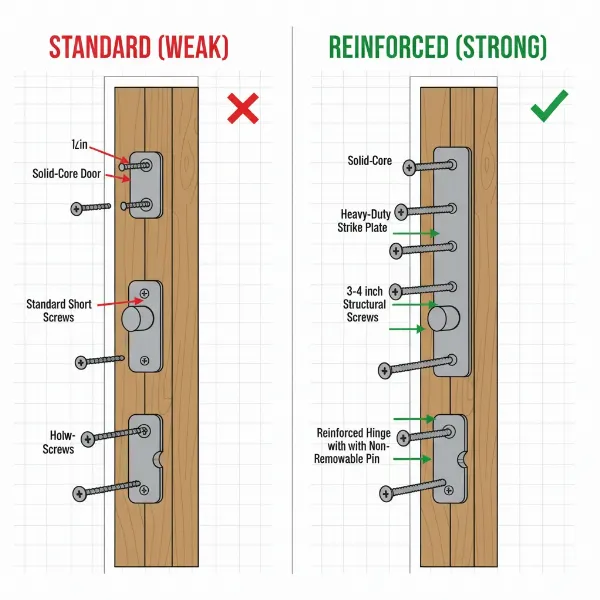 Detailed diagram showing a reinforced door frame with long screws and heavy-duty strike plate.
Finally, ensuring professional installation of both your smart lock and any door reinforcement hardware is crucial. Proper alignment, secure mounting, and correct setup of all security features can significantly reduce vulnerabilities that might arise from DIY errors.
Choosing the Right Smart Lock for Physical Resilience
Selecting a smart lock is a significant investment in your home’s security. When physical resilience is a top priority, a strategic approach to choosing the right device is essential.
First, assess your door type and its existing hardware. Some smart locks are designed as full deadbolt replacements, while others are retrofit solutions that work with your current lock. Ensure the chosen smart lock is compatible with your door’s thickness, backset, and bore hole size. More importantly, consider the material and construction of your door and frame, as even the strongest smart lock won’t compensate for a flimsy door.
Next, prioritize security certifications. Always look for smart locks with an ANSI/BHMA Grade 1 certification. This is the highest residential grade and indicates superior resistance to forced entry, drilling, and other forms of physical attack. This certification offers an independent assurance of the lock’s physical durability and longevity.
Material matters immensely for physical resilience. Opt for smart locks built with robust, heavy-duty materials like solid steel, hardened steel, or high-grade aluminum alloy. These materials provide a strong outer shell that can withstand prying, hammering, and drilling attempts better than cheaper plastic or light metal alternatives. Pay attention to the quality of the deadbolt mechanism itself, ensuring it’s solid and difficult to manipulate.
Evaluate the manual override options. While convenience is key, a well-designed smart lock will include a secure manual keyhole. Ensure this mechanism is not easily picked or bypassed. Some manufacturers integrate drill-resistant cylinders or anti-bump technology into their traditional keyways to bolster this aspect of physical security.
Lastly, read user reviews focusing on durability and physical resistance. While specifications are important, real-world experiences can provide valuable insights into how a smart lock stands up to wear, tear, and potential attack attempts. Look for feedback on the longevity of the materials and the lock’s performance under various conditions.
Best Practices for Maintaining Physical Smart Lock Security
Even after installing a highly secure smart lock and reinforcing your door, ongoing vigilance and maintenance are key to sustaining maximum physical protection.
Regular inspections are paramount. Periodically check your smart lock, door, and frame for any signs of wear, damage, or tampering. Look for scratches, dents, loose components, or any indication that someone might have attempted to force entry or manipulate the lock. Ensure all screws are tight and that the deadbolt operates smoothly within the strike plate. Addressing minor issues promptly can prevent them from becoming major security vulnerabilities.
Enhance your surrounding environment to deter potential attackers. Good outdoor lighting, especially around entry points, can significantly reduce the appeal of your home as a target. Consider installing surveillance cameras that monitor your front door area. Visible cameras act as a deterrent and provide crucial evidence if an incident occurs. Some smart lock systems integrate directly with cameras for a comprehensive security solution.
Effective battery management is also crucial for smart locks. While primarily a functional concern, a dead battery can lead to a lockout situation or, in some designs, compromise certain security features if the lock defaults to an easily exploitable state during power failure. Regularly monitor battery levels through your smart lock app and replace batteries proactively before they fully deplete. Many smart locks include emergency power options, such as micro-USB ports, but consistent battery replacement is the best practice.
For complex issues or routine checks, consider professional maintenance. A qualified locksmith or smart home technician can inspect your smart lock and door assembly, identify potential weaknesses, and perform necessary adjustments or upgrades. Their expertise ensures that all components are functioning optimally and provides an added layer of assurance for your physical security.
Smart Lock Accessories for Enhanced Physical Protection
Beyond the smart lock itself, several accessories can significantly bolster the physical security of your entry points, creating a multi-layered defense against intruders.
Door viewers or peepholes are simple yet effective tools that allow you to visually verify who is at your door before opening it. For enhanced security, consider smart doorbells with integrated cameras and two-way audio, which offer a broader field of view and remote monitoring capabilities directly from your smartphone.
Integrating security cameras, whether standalone or part of a smart home ecosystem, provides an invaluable layer of deterrence and surveillance. Placing cameras strategically to cover your front door and surrounding areas can deter would-be intruders and capture footage in case of an incident. Many smart locks can be linked with these cameras, offering event-triggered recording when the lock is accessed or tampered with.
Door and window sensors detect when an entry point is opened or breached. While often associated with general home security systems, these sensors can provide immediate alerts to your smartphone or security system if a door (or window) is forced open, even if the smart lock itself is bypassed. This early warning can be critical for responding to a physical intrusion attempt.
For an extra layer of robust, low-tech physical security, consider installing reinforced door chains or security bars. These accessories provide additional physical barriers that must be overcome even if the smart lock is compromised. Heavy-duty door chains can prevent the door from being fully opened, while security bars, especially those designed for sliding glass doors, can prevent forced entry through impact or manipulation. These simple additions can buy precious time and deter attackers.
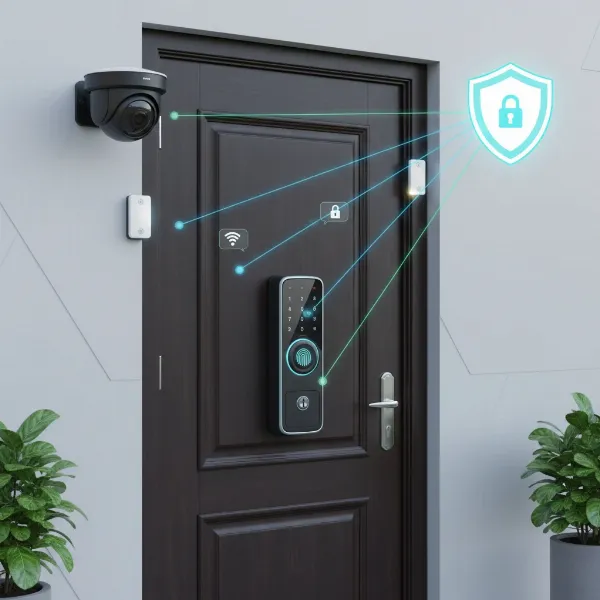 Smart home security setup with a smart lock, camera, and door sensor for enhanced protection.
“True home security isn’t just about the technology you install, but how well that technology integrates with and fortifies the foundational physical barriers of your home. A smart lock is a powerful tool, but it’s most effective when combined with a strong door, reinforced frame, and vigilant maintenance.” – John Smith, Master Locksmith and Smart Home Security Consultant
Conclusion
Securing your smart lock against physical force requires a comprehensive strategy that extends beyond the lock itself. By understanding the vulnerabilities of both the smart lock’s construction and your door’s physical integrity, you can implement effective countermeasures. Prioritizing smart locks with ANSI Grade 1 certification, opting for durable materials, and meticulously reinforcing your door frame with longer screws and stronger strike plates are fundamental steps. Furthermore, integrating smart accessories like cameras and sensors, coupled with regular inspections and professional maintenance, creates a multi-layered defense. Embracing these practices ensures that your smart lock delivers not only convenience but also the robust physical security your home deserves. Are you ready to fortify your home’s entry points and truly secure your peace of mind?
Frequently Asked Questions
What does ANSI/BHMA Grade 1 certification mean for smart locks?
|
Our Picks for the Best Smart Lock in 2026
As an Amazon Associate I earn from qualifying purchases.
|
||
| Num | Product | Action |
|---|---|---|
| 1 | TEEHO TE001 Keyless Entry Door Lock with Keypad - Smart Deadbolt Lock for Front Door with 2 Keys - Auto Lock - Easy Installation - Satin Nickel |

|
| 2 | eufy Security Smart Lock C220, Fingerprint Keyless Entry Door Lock, Built-in Wi-Fi, App Remote Control, Front Door Smart Deadbolt, IP53 Waterproof, 8-Months Battery, Nickel |
|
| 3 | Electronic Passwords Keyless Entry Door Locks Smart Deadbolt Metal Lock Auto Time Delay Locking Secure Durable Low Battery Alert Type-C Port for Emergency Charging |
|
| 4 | TEEHO TE001 Keyless Entry Door Lock with Keypad - Smart Deadbolt Lock for Front Door with 2 Keys - Auto Lock - Easy Installation - Matte Black |
|
| 5 | ULTRALOQ U-Bolt Pro WiFi Smart Lock with Door Sensor, 8-in-1 Keyless Entry Door Lock with Fingerprint ID, App Remote Control, Built-in WiFi Keypad Deadbolt, Auto Unlock, IP65 Waterproof, Easy Install |
|
| 6 | Philips Wi-Fi Door Lock, WiFi Smart Lock Keyless Entry Deadbolt for Front Door, Compatible with Alexa & Google Assistant, Remote Control, Built-in WiFi, APP Fingerprint Passcode Unlock, Auto Locking |
|
| 7 | Philips Wi-Fi Door Lock, WiFi Smart Lock Keyless Entry Deadbolt for Front Door, Remote Control, Built-in WiFi, APP Fingerprint Passcode Unlock, Auto Locking |
|
| 8 | eufy Security Smart Lock C220, Fingerprint Keyless Entry Door Lock, Built-in Wi-Fi, App Remote Control, Front Door Smart Lock Deadbolt, 8Months Battery, Reliable Power, IP53 Waterproof, BHMA Grade 3 |
|
| 9 | TEEHO TE001 Keyless Entry Door Lock with Keypad - Smart Deadbolt Lock for Front Door with 2 Keys - Auto Lock - Easy Installation - Oil-Rubbed Bronze |
|
| 10 | Schlage Encode Smart WiFi Deadbolt Lock for Front Door - Keyless Entry with App or Touchscreen - Works with Alexa, Hey Google, & Airbnb - Create Codes for Guests - Matte Black |
|
ANSI/BHMA Grade 1 certification is the highest residential grade for locks, indicating superior durability, strength, and resistance to forced entry, impact, and tampering. It signifies that the smart lock has undergone rigorous testing by independent organizations, offering the highest level of physical security for your home.
Can a smart lock be picked like a traditional lock?
Some smart locks retain a traditional manual keyhole for emergency access. If this keyhole isn’t designed with advanced pick-resistant features, it could potentially be susceptible to traditional lock-picking techniques. Opting for smart locks with high-security keyways or drill-resistant cylinders can mitigate this risk.
How do I prevent my door from being kicked in, even with a strong smart lock?
To prevent kick-ins, you must reinforce the entire door assembly. This includes using long, 3- to 4-inch screws for your strike plate and hinges, ensuring these screws anchor into the structural studs of your wall. Upgrading to a heavy-duty, reinforced strike plate and a solid-core door also significantly increases resistance to forced entry.
Are all smart lock materials equally resistant to physical attacks?
No, smart lock materials vary significantly in their resistance to physical attacks. Locks made from cheap plastic or light metals are more easily broken or pried open. For optimal physical security, choose smart locks constructed from robust materials like solid steel, hardened steel, or durable aluminum alloy, which offer greater resistance to drilling and impact.
Should I get a professional to install my smart lock for better physical security?
Yes, professional installation is highly recommended for optimal physical security. Experts ensure that the smart lock is correctly aligned, securely mounted, and all components (including the strike plate and screws) are properly installed to maximize its resistance against forced entry and tampering. This prevents common installation errors that could compromise security.
