Selecting the perfect hardware finish for your home can feel like a daunting task. From cabinet pulls to door handles, each piece plays a crucial role in defining your space’s character and overall aesthetic. As an experienced technician who has witnessed the evolution of design trends and materials, I understand the nuances of various finishes and their impact. This guide aims to demystify the process, helping you choose hardware finishes that not only match your existing decor but also reflect your personal style, ensuring a cohesive and sophisticated look throughout your home.
The Art of Hardware Finishes: Why Your Choices Matter
Hardware finishes are more than just functional elements; they are essential design details that can significantly influence the ambiance and perceived value of your home. The right finish can seamlessly integrate with your existing design, enhancing its beauty and ensuring a polished appearance.
These finishes are essentially the protective and decorative layers applied to metal hardware, dictating its color, texture, and sheen. They range from shiny and reflective to muted and matte, each offering a distinct visual appeal. Beyond aesthetics, the chosen finish directly impacts the hardware’s durability and ease of maintenance, particularly in high-traffic areas like kitchens and bathrooms. A well-chosen finish can withstand daily wear and tear, resist fingerprints, and maintain its allure for years, while a mismatched one can quickly detract from your home’s appeal.
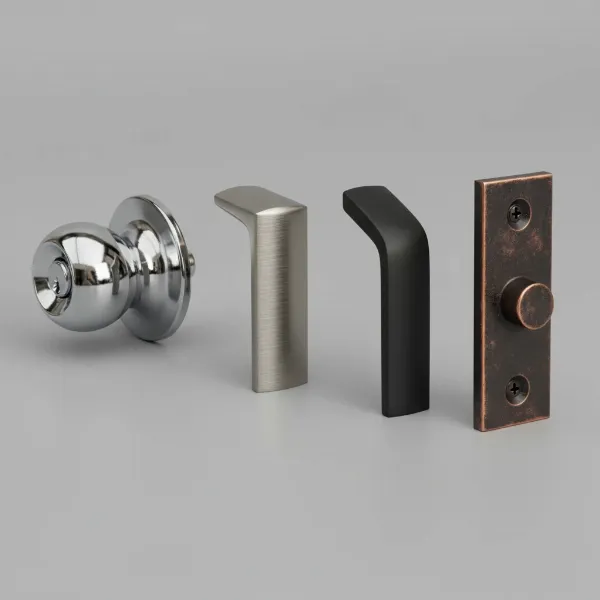 Close-up comparison of various metal hardware finishes like polished, brushed, matte, and antique.
Understanding Popular Hardware Finishes
The market offers a dazzling array of hardware finishes, each with unique characteristics suitable for different styles and preferences. Understanding these popular options is the first step in making an informed decision.
Polished Finishes: The Luster of Elegance
Polished finishes, such as polished chrome and polished brass, are characterized by their bright, reflective, and often mirror-like surfaces. They exude a sense of luxury and sophistication, catching light and adding sparkle to a room.
- Polished Chrome: A cool-toned, highly reflective silver finish.
- Pros: Modern, versatile, easy to clean, highly durable.
- Cons: Shows fingerprints and water spots easily, can appear cold if not balanced.
- Best for: Modern, contemporary, minimalist, and transitional styles, especially in bathrooms and kitchens.
- Polished Brass: A warm, golden, and highly reflective finish.
- Pros: Classic, adds richness and warmth, makes a bold statement.
- Cons: Can tarnish over time (requires regular polishing for sustained shine), may look dated if not paired thoughtfully.
- Best for: Traditional, vintage, and eclectic designs, bringing a touch of opulence.
|
Our Picks for the Best Smart Lock in 2026
As an Amazon Associate I earn from qualifying purchases.
|
||
| Num | Product | Action |
|---|---|---|
| 1 | eufy Security Smart Lock C220, Fingerprint Keyless Entry Door Lock, Built-in Wi-Fi, App Remote Control, Front Door Smart Deadbolt, IP53 Waterproof, 8-Months Battery, Nickel |

|
| 2 | Electronic Passwords Keyless Entry Door Locks Smart Deadbolt Metal Lock Auto Time Delay Locking Secure Durable Low Battery Alert Type-C Port for Emergency Charging |
|
| 3 | Philips Wi-Fi Door Lock, WiFi Smart Lock Keyless Entry Deadbolt for Front Door, Compatible with Alexa & Google Assistant, Remote Control, Built-in WiFi, APP Fingerprint Passcode Unlock, Auto Locking |
|
| 4 | TEEHO TE001 Keyless Entry Door Lock with Keypad - Smart Deadbolt Lock for Front Door with 2 Keys - Auto Lock - Easy Installation - Satin Nickel |
|
| 5 | TEEHO TE001 Keyless Entry Door Lock with Keypad - Smart Deadbolt Lock for Front Door with 2 Keys - Auto Lock - Easy Installation - Oil-Rubbed Bronze |
|
| 6 | TEEHO TE001 Keyless Entry Door Lock with Keypad - Smart Deadbolt Lock for Front Door with 2 Keys - Auto Lock - Easy Installation - Matte Black |
|
| 7 | eufy Security Smart Lock C220, Fingerprint Keyless Entry Door Lock, Built-in Wi-Fi, App Remote Control, Front Door Smart Lock Deadbolt, 8Months Battery, Reliable Power, IP53 Waterproof, BHMA Grade 3 |
|
| 8 | Schlage Encode Smart WiFi Deadbolt Lock for Front Door - Keyless Entry with App or Touchscreen - Works with Alexa, Hey Google, & Airbnb - Create Codes for Guests - Matte Black |
|
| 9 | Philips Wi-Fi Door Lock, WiFi Smart Lock Keyless Entry Deadbolt for Front Door, Remote Control, Built-in WiFi, APP Fingerprint Passcode Unlock, Auto Locking |
|
| 10 | ULTRALOQ U-Bolt Pro WiFi Smart Lock with Door Sensor, 8-in-1 Keyless Entry Door Lock with Fingerprint ID, App Remote Control, Built-in WiFi Keypad Deadbolt, Auto Unlock, IP65 Waterproof, Easy Install |
|
Brushed & Satin Finishes: Subtle Sophistication
Brushed and satin finishes offer a softer, more subdued look compared to their polished counterparts. They feature a slight texture that diffuses light, resulting in a muted glow that is both elegant and forgiving.
- Brushed Nickel: A warm silver-toned finish with a subtle, textured appearance.
- Pros: Versatile, hides fingerprints and smudges well, resists corrosion, balances modern and traditional.
- Cons: Can be difficult to match across different brands due to slight variations in tone.
- Best for: Transitional, modern farmhouse, contemporary, and traditional interiors, offering broad appeal.
- Satin Brass: A softer, less reflective gold-toned finish than polished brass.
- Pros: Warm yet understated, adds elegance without being overly flashy, ages gracefully.
- Cons: Still a “gold” tone, which might not suit all palettes.
- Best for: Mid-century modern, transitional, and contemporary spaces seeking a warm, sophisticated touch.
Dark & Matte Finishes: Bold Statements
Dark and matte finishes provide a striking contrast and a contemporary edge. Their non-reflective surfaces offer a sophisticated, often industrial, aesthetic.
- Matte Black: A non-reflective, deep black finish.
- Pros: Highly modern, creates bold contrast, excellent at hiding fingerprints and smudges, acts as a neutral.
- Cons: Can absorb light, potentially making a space feel darker if overused.
- Best for: Modern, industrial, Scandinavian, and farmhouse styles, offering a sleek, minimalist look.
- Oil-Rubbed Bronze: A dark, warm brown finish with subtle copper undertones that can lighten over time, revealing metallic accents.
- Pros: Rich, rustic, develops a unique patina over time, traditional appeal.
- Cons: Can vary significantly between manufacturers, initial finish may wear to reveal underlying metal.
- Best for: Traditional, rustic, farmhouse, and Tuscan-inspired designs.
Antique & Specialty Finishes: Character and Uniqueness
These finishes often replicate the look of aged or handcrafted metals, adding unique character and a sense of history to hardware.
- Antique Brass: A weathered, aged brass look, often with darker areas in recesses.
- Pros: Adds vintage charm, warm and inviting, masks imperfections well.
- Cons: Can be perceived as old-fashioned if not integrated into a cohesive vintage or traditional design.
- Best for: Vintage, eclectic, traditional, and colonial styles.
- Copper: A warm, reddish-brown metallic finish that naturally patinas over time.
- Pros: Unique, adds warmth and character, antimicrobial properties.
- Cons: Prone to tarnishing and scratching, requires specific care.
- Best for: Rustic, industrial, and artistic spaces.
Mastering the Mix: Coordinating Hardware with Existing Elements
The idea that all metal finishes in a room must perfectly match is outdated. Modern design embraces the art of mixing metals and finishes to create layered, intentional, and unique spaces.
Matching vs. Coordinating: The Modern Approach
While perfectly matching every piece of hardware across different brands can be challenging and often unnecessary due to manufacturing variations, coordinating finishes is key. This means selecting finishes that share similar undertones (warm or cool) or complementary sheens, creating a harmonious palette rather than an identical one. For example, a satin faucet often pairs beautifully with satin or brushed hardware, rather than a polished finish.
Harmonizing with Faucets and Lighting
Faucets and light fixtures are often the most prominent metal elements in kitchens and bathrooms. When choosing cabinet hardware, consider these existing fixtures. While an exact match isn’t mandatory, aim for finishes that resonate with their dominant metal or undertone.
For instance, if your kitchen features polished chrome faucets, continuing with polished chrome cabinet hardware ensures a unified, sleek appearance. However, you could also introduce matte black cabinet hardware for a striking contrast, using the chrome as a dominant cool tone and the black as a neutral accent.
“Instead of chasing a perfect twin for your faucet, focus on creating a coordinated palette that blends complementary tones within the same metal family.” – Design Pro, Hardware Selection Expert
Integrating with Cabinetry and Decor
Your cabinetry, wall colors, and overall decor significantly influence the ideal hardware finish.
- Contrast for Impact: For a bold statement, choose a hardware finish that starkly contrasts with your cabinet color—think matte black hardware on white cabinets, or satin brass on navy blue.
- Blend for Subtlety: If you prefer a more understated look, opt for finishes similar in color and lightness to your cabinets, such as oil-rubbed bronze on cherry wood.
Consider the undertones of your cabinetry and doors. Warm-toned woods (reds, oranges, yellow-browns) generally pair well with warm hardware finishes (brass, bronze, gold). Cool-toned cabinets (grays, blues, stark whites) often look best with cool finishes (chrome, nickel, stainless steel). However, intentionally mixing warm and cool metals can also create dynamic visual interest, provided it’s done thoughtfully.
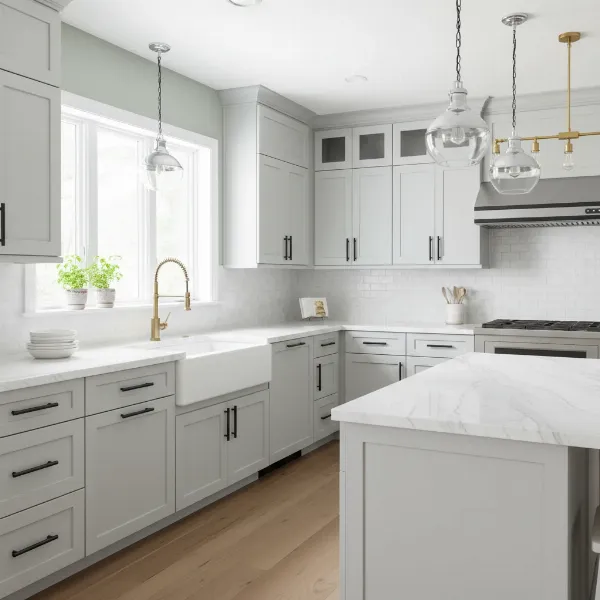 Modern kitchen with contrasting hardware finishes on white cabinets and a dark island.
The Warm vs. Cool Undertone Rule
Metals, like colors, have inherent warm or cool undertones.
- Warm Metals: Brass, copper, gold, oil-rubbed bronze. These add richness and warmth.
- Cool Metals: Chrome, nickel, stainless steel. These bring a sleek, modern edge.
A common guideline for mixing is to either stick to primarily warm metals, primarily cool metals, or choose one dominant metal and introduce 1-2 complementary accent metals, ensuring they share similar undertones if you’re aiming for harmony. Matte black often acts as a neutral and pairs well with almost any other finish, whether warm or cool. Limiting your palette to two or three different finishes per area helps prevent a chaotic appearance.
Your Ultimate Hardware Finish Buying Guide
Choosing the right hardware finish requires a thoughtful approach, balancing aesthetics, functionality, and budget.
Define Your Home’s Style and Desired Aesthetic
Before diving into options, clarify the overarching style of your home or the specific room you are furnishing.
- Modern/Minimalist: Polished chrome, brushed nickel, or matte black are strong contenders, often with clean-lined hardware designs.
- Traditional/Classic: Oil-rubbed bronze, polished brass, or antique brass lend themselves to elegant, vintage-inspired pieces.
- Rustic/Farmhouse: Matte black and oil-rubbed bronze evoke warmth and charm, especially with handcrafted or distressed hardware.
- Transitional: Brushed nickel and satin brass strike a balance between classic and contemporary.
- Eclectic/Vintage: Thoughtful mixing of finishes, perhaps with polished or antique brass, can add character.
Consider whether you want your hardware to blend seamlessly or provide a striking contrast. This decision will guide your finish selection, allowing you to opt for finishes that either complement or boldly stand out against your doors or cabinetry.
Prioritize Functionality, Durability, and Maintenance
Think about how the hardware will be used daily.
- High-Traffic Areas: Kitchens and bathrooms demand durable finishes that can withstand frequent handling, moisture, and cleaning.
- Fingerprints and Smudges: If easily visible marks annoy you, brushed, satin, or matte finishes are excellent choices as they tend to hide fingerprints more effectively than highly polished ones.
- Ease of Cleaning: Some finishes, like polished chrome, are easy to wipe clean but may require more frequent attention to maintain their shine. Others, like oil-rubbed bronze, may develop a natural patina over time that requires less strict upkeep but changes the finish’s appearance.
Consider Your Budget and Scope
Hardware costs can add up quickly, especially for large projects involving many pieces. Establish a realistic budget from the outset. While a single knob or pull might be inexpensive, equipping an entire kitchen or home can be a significant investment. You might choose to splurge on a statement finish for a few key areas and opt for more budget-friendly, coordinating options elsewhere, or tackle one room at a time.
Always Sample Before Committing
It’s crucial to see how finishes look in your actual space and under your specific lighting conditions. The color and sheen of a finish can appear different in a showroom compared to your home. Order samples of your top choices and hold them against your cabinets, doors, and other fixed elements. This allows you to visualize the final look and ensure harmony before making a bulk purchase.
Don’t Be Afraid to Mix Metals (Wisely)
Embrace the modern trend of mixing metals, but do so with intention.
- Limit your palette: Stick to two or three distinct finishes per room to maintain cohesion.
- Choose a dominant metal: Select one finish to be the primary one for larger fixtures (like faucets) and use others as accents.
- Vary texture and sheen: Combine polished, brushed, and matte finishes to add visual interest and dimension.
- Distribute evenly: Spread the different metals throughout the space for visual balance. For example, if you have brushed nickel cabinet pulls, incorporate a matte black light fixture to tie the look together.
Installation, Care, and Troubleshooting Your Hardware Finishes
Proper installation and ongoing care are vital to ensuring your hardware looks its best and lasts for years.
Basic Installation Tips for New Hardware
- Measure Accurately: For cabinet pulls, ensure the center-to-center measurement matches existing holes or drill new holes precisely. Use a template for consistency.
- Protect Surfaces: Use painter’s tape to mark drilling spots and prevent chipping, especially on delicate finishes or cabinet surfaces.
- Don’t Overtighten: Hand-tighten screws to avoid stripping them or damaging the hardware finish or cabinet material.
- Check Alignment: Ensure all knobs and pulls are installed straight and uniformly.
Maintaining the Luster: Cleaning and Care
Each finish has specific care requirements.
- General Cleaning: For most finishes, a soft cloth dampened with warm water and mild soap is sufficient. Avoid harsh chemicals, abrasive cleaners, or scrub brushes, as these can strip the finish.
- Polished Finishes: Wipe regularly to remove fingerprints and water spots. Use a non-abrasive polish specifically designed for the metal (e.g., brass cleaner for polished brass) if tarnishing occurs.
- Brushed/Satin Finishes: These are more forgiving, requiring less frequent cleaning for fingerprints. A gentle wipe with a damp cloth is usually enough.
- Matte Black: Easily cleaned with a soft, damp cloth. Avoid oily cleaners that can leave a sheen.
- Oil-Rubbed Bronze: Many prefer the natural patina it develops. If cleaning is necessary, use only a damp cloth and avoid harsh chemicals that can remove the finish.
Addressing Common Issues
- Scratches: Minor scratches on brushed or matte finishes may be less noticeable. For deeper scratches or polished finishes, professional repair or replacement might be necessary.
- Tarnishing: Especially common with unlacquered brass or copper. Regular polishing with appropriate products can restore shine. If you desire the antique look, allow it to patina naturally.
- Loose Hardware: Periodically check and tighten screws to prevent hardware from becoming loose, which can lead to damage.
Essential Hardware Accessories to Complement Your Finishes
Beyond the primary hardware, various accessories can enhance functionality and aesthetic cohesion.
- Hinges: Matching hinges to your chosen knob or pull finish creates a seamless look, especially on exposed cabinet or door hinges.
- Backplates/Rosettes: These decorative plates sit behind knobs or levers, adding a touch of elegance or covering existing imperfections around holes.
- Door Stops: Available in various finishes, these prevent doors from hitting walls, protecting both surfaces and maintaining aesthetic consistency.
- Drawer Slides: While often hidden, for exposed drawer systems, ensure their finish complements the overall scheme.
- Cabinet Catches/Latches: For certain cabinet styles, these functional pieces can also contribute to the room’s hardware finish palette.
- Mounting Hardware: Though mostly unseen, ensuring quality mounting hardware contributes to the longevity and stability of your visible pieces.
Using complementary accessories extends your chosen finish palette throughout the space, reinforcing the design theme. When selecting, consider not just the finish, but also the style and scale of the accessory to ensure it harmonizes with your primary hardware.
Conclusion
Choosing the right hardware finish is a crucial step in defining your home’s character and achieving a cohesive, polished look. By understanding the diverse range of available finishes, considering factors like your home’s style, desired aesthetic, and practical needs, and embracing the art of thoughtful coordination, you can transform ordinary hardware into extraordinary design statements. Remember, the goal is to create a space that feels uniquely yours, where every detail, down to the smallest knob, contributes to the overall beauty and functionality.
What hardware finish combination are you excited to explore in your next home improvement project?
Frequently Asked Questions
Can you mix different hardware finishes in the same room?
Yes, mixing different hardware finishes is a popular modern design trend. To achieve a cohesive look, limit your palette to two or three complementary finishes and ensure they share similar undertones (warm with warm, cool with cool) or contrast effectively, like matte black with brass.
Should kitchen faucet match cabinet hardware?
While traditionally an exact match was preferred, modern design allows for coordination rather than strict matching. You can match your faucet to your cabinet hardware for a cohesive look, or choose complementary finishes that share undertones or create intentional contrast.
What hardware finishes are most durable for high-traffic areas?
Brushed nickel and polished chrome are highly durable and resistant to wear, making them excellent choices for high-traffic areas like kitchens and bathrooms. Matte black is also very durable and effectively hides fingerprints and smudges, requiring less frequent cleaning.
How do I choose hardware that complements my cabinet color?
For a bold look, select a hardware finish that contrasts with your cabinet color (e.g., black on white). For a subtle integration, choose a finish similar in tone and lightness to your cabinets. Always consider the undertones of both your cabinets and the hardware finish.
Are certain hardware finishes considered timeless?
Brushed nickel and polished chrome are often considered timeless due to their versatility and ability to complement various design styles, from traditional to modern. Matte black is also emerging as a classic, valued for its sleekness and adaptability.
How many different hardware finishes should I use in one house?
To maintain a cohesive feel throughout your home, it’s generally recommended to stick to a palette of 3-4 different hardware finishes. Within a single room, aim for no more than 1-2 finishes to ensure a balanced and intentional design without overwhelming the space.
