Waking up to a dead smart lock battery can quickly turn modern convenience into a frustrating lockout. Smart locks offer unparalleled security and control, but their reliance on battery power means understanding and managing battery life is crucial. If you’ve noticed your smart lock constantly running out of juice, you’re not alone. This guide will explore the most common culprits behind rapid battery drain and provide actionable solutions to keep your smart lock powered and your home secure.
Understanding Smart Lock Battery Life: What’s Normal?
Smart locks are designed to offer impressive battery longevity, with most models typically lasting anywhere from six months to a year under normal usage conditions. Brands like Lockly, Schlage, and Yale often promise up to a year of use, while others such as August might range from three to six months depending on settings and activity. [cite: 1 (search 1); 3, 5 (search 2)] However, this lifespan isn’t static; it’s a dynamic estimation heavily influenced by a variety of operational and environmental factors. Recognizing what constitutes a typical battery cycle helps you identify when your lock might be underperforming.
Common Reasons Your Smart Lock Battery Drains Quickly
Several factors can cause your smart lock to chew through batteries faster than expected. Pinpointing the exact cause is the first step toward a lasting solution.
Mechanical Friction or Misalignment
|
Our Picks for the Best Smart Lock in 2026
As an Amazon Associate I earn from qualifying purchases.
|
||
| Num | Product | Action |
|---|---|---|
| 1 | eufy Security Smart Lock C220, Fingerprint Keyless Entry Door Lock, Built-in Wi-Fi, App Remote Control, Front Door Smart Deadbolt, IP53 Waterproof, 8-Months Battery, Nickel |

|
| 2 | Schlage Encode Smart WiFi Deadbolt Lock for Front Door - Keyless Entry with App or Touchscreen - Works with Alexa, Hey Google, & Airbnb - Create Codes for Guests - Matte Black |
|
| 3 | TEEHO TE001 Keyless Entry Door Lock with Keypad - Smart Deadbolt Lock for Front Door with 2 Keys - Auto Lock - Easy Installation - Oil-Rubbed Bronze |
|
| 4 | Electronic Passwords Keyless Entry Door Locks Smart Deadbolt Metal Lock Auto Time Delay Locking Secure Durable Low Battery Alert Type-C Port for Emergency Charging |
|
| 5 | eufy Security Smart Lock C220, Fingerprint Keyless Entry Door Lock, Built-in Wi-Fi, App Remote Control, Front Door Smart Lock Deadbolt, 8Months Battery, Reliable Power, IP53 Waterproof, BHMA Grade 3 |
|
| 6 | ULTRALOQ U-Bolt Pro WiFi Smart Lock with Door Sensor, 8-in-1 Keyless Entry Door Lock with Fingerprint ID, App Remote Control, Built-in WiFi Keypad Deadbolt, Auto Unlock, IP65 Waterproof, Easy Install |
|
| 7 | TEEHO TE001 Keyless Entry Door Lock with Keypad - Smart Deadbolt Lock for Front Door with 2 Keys - Auto Lock - Easy Installation - Matte Black |
|
| 8 | TEEHO TE001 Keyless Entry Door Lock with Keypad - Smart Deadbolt Lock for Front Door with 2 Keys - Auto Lock - Easy Installation - Satin Nickel |
|
| 9 | Philips Wi-Fi Door Lock, WiFi Smart Lock Keyless Entry Deadbolt for Front Door, Compatible with Alexa & Google Assistant, Remote Control, Built-in WiFi, APP Fingerprint Passcode Unlock, Auto Locking |
|
| 10 | Philips Wi-Fi Door Lock, WiFi Smart Lock Keyless Entry Deadbolt for Front Door, Remote Control, Built-in WiFi, APP Fingerprint Passcode Unlock, Auto Locking |
|
One of the most frequent, yet often overlooked, reasons for rapid battery drain is mechanical resistance. If your deadbolt isn’t moving smoothly into the strike plate, the lock’s motor has to work harder, consuming significantly more power. This friction can be caused by improper installation, loose screws, or even seasonal changes in door frames that lead to misalignment. [cite: 1, 3, 4 (search 1); 2, 4 (search 2)]
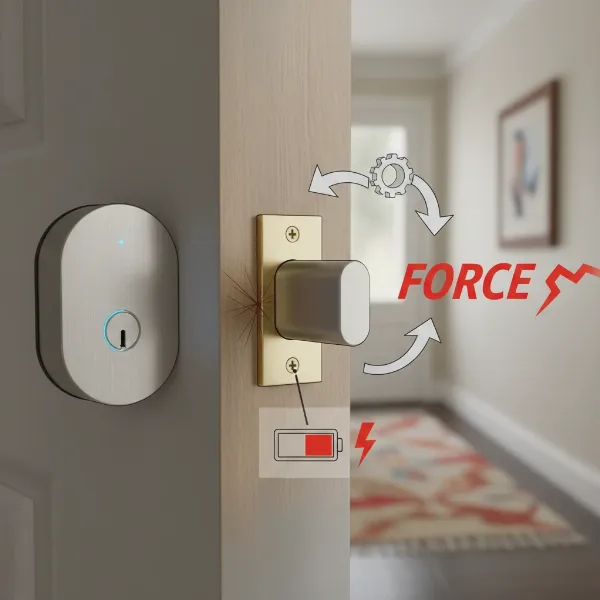 Diagram showing smart lock deadbolt misaligned with strike plate causing battery drain.
Weak or Unstable Wireless Connectivity
Smart locks rely on Wi-Fi or Bluetooth for their “smart” functions, such as remote access and notifications. A weak or intermittent signal forces the lock to constantly search for and re-establish a connection, a process that is highly power-intensive. Homes with thick walls, distant routers, or a crowded wireless environment can exacerbate this issue. [cite: 2, 5 (search 1); 1, 2, 3 (search 2)]
Using Incorrect or Low-Quality Batteries
The type and quality of batteries you use are paramount. Many smart lock manufacturers recommend specific high-quality alkaline batteries, and using cheaper, generic, or incompatible batteries can significantly shorten their lifespan. Some smart locks might even perform poorly with rechargeable or lithium-ion batteries, depending on the manufacturer’s specifications. [cite: 2, 3, 5 (search 1); 1, 2, 4 (search 2)] Always check your lock’s manual for recommended battery types.
Frequent Usage and Excessive Features
Every time you lock or unlock your door, or when your lock performs an automated action, it draws power. Locks in high-traffic areas, or those with short auto-lock timers (e.g., relocking after 30 seconds), will experience more motor cycles and thus faster battery depletion. Similarly, a constant stream of notifications or active features can contribute to increased power consumption. [cite: 3, 4 (search 1); 1, 2, 3 (search 2)]
Extreme Environmental Temperatures
Batteries are sensitive to temperature fluctuations. Exposure to extreme cold can reduce a battery’s overall capacity and power output, while excessive heat can accelerate chemical reactions, causing batteries to drain more quickly. If your smart lock is installed in an area with direct sunlight, harsh cold, or high humidity, its battery life may suffer. [cite: 2, 4 (search 1); 2, 3 (search 2)]
Outdated Firmware or Software Glitches
Like any smart device, smart locks benefit from regular software updates. Outdated firmware can contain bugs or lack efficiency improvements that could optimize battery usage. These glitches might cause the lock to perform unnecessary background tasks or consume power inefficiently. [cite: 1 (search 2)]
Lack of Regular Maintenance
Over time, dust, dirt, and debris can accumulate around your smart lock’s sensors and internal mechanisms. This buildup can obstruct moving parts, forcing the motor to work harder and consume more power. Neglecting basic cleaning and maintenance can slowly but surely degrade your lock’s efficiency. [cite: 3, 4 (search 1); 1 (search 2)]
How to Maximize Your Smart Lock’s Battery Life
Preventing rapid battery drain often comes down to proactive care and smart usage. Implementing these tips can significantly extend the time between battery replacements.
Ensure Flawless Installation and Alignment
Periodically inspect your door and lock for any signs of friction. The deadbolt should extend and retract smoothly without resistance. If you notice rubbing, lubricate the deadbolt slot with a fluid lubricant like WD40, adjust the strike plate on the door frame, or tighten any loose screws. If the issue persists, consider having a professional inspect the installation. [cite: 1, 3 (search 1); 2, 4 (search 2)]
Invest in High-Quality, Compatible Batteries
Always use the battery type and brand recommended by your smart lock’s manufacturer. For many locks, high-quality alkaline batteries (like Duracell or Energizer) are recommended for optimal performance and longevity. [cite: 3, 5 (search 1); 1, 2, 4 (search 2)] Avoid mixing old and new batteries, as this can lead to uneven discharge and premature drain. It’s also a good practice to test new batteries, even straight out of the package, to ensure they’re fully charged. [cite: 5 (search 1)]
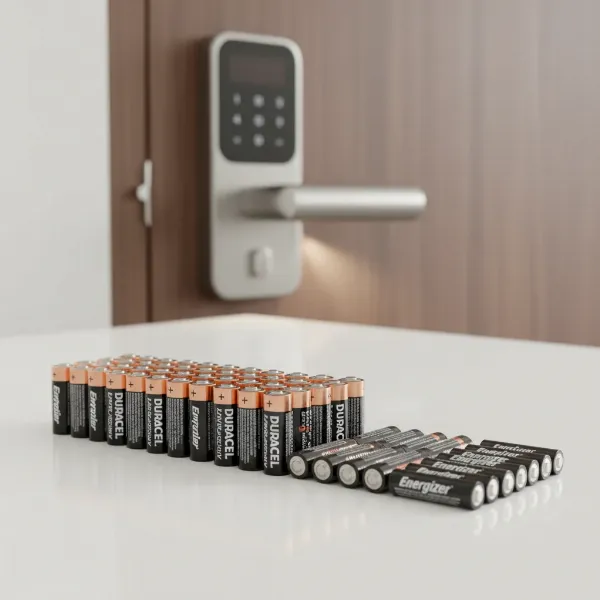 Assortment of high-quality alkaline batteries recommended for smart locks with a smart lock visible.
Optimize Network Connection and Settings
A strong and stable Wi-Fi or Bluetooth connection is vital. If your router is far from the door, consider moving it closer or using a Wi-Fi extender or signal repeater to strengthen the signal to your lock. [cite: 2, 5 (search 1); 1, 2, 3 (search 2)] Additionally, delve into your lock’s app settings. Extend auto-lock timers if you frequently enter and exit your home, and disable any unnecessary notifications that constantly wake up your device.
Keep Your Firmware Up-to-Date
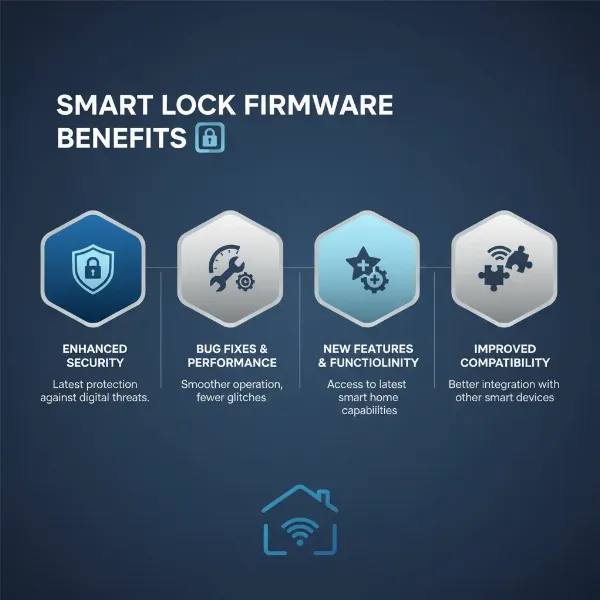
Regularly check your smart lock’s companion app for available firmware updates. Manufacturers often release updates that include battery optimization improvements, bug fixes, and enhanced security features. Installing these updates can significantly improve your lock’s power efficiency. [cite: 1, 2, 3 (search 2)]
Perform Routine Cleaning and Maintenance
Make it a habit to regularly wipe down your smart lock’s exterior and clean around its sensors and moving parts. Use a soft cloth to remove dust, dirt, and debris that could impede its mechanism. This simple step can prevent the motor from working harder than necessary. [cite: 3, 4 (search 1); 1 (search 2)]
Protect from Harsh Weather Conditions
If your smart lock is exposed to the elements, consider adding weatherproofing accessories like protective covers or sealants. Installing the lock in a sheltered area, away from direct sunlight or extreme drafts, can also help maintain optimal battery performance, especially in climates with significant temperature swings. [cite: 2, 4 (search 1); 2, 3 (search 2)]
Troubleshooting Smart Lock Battery Drain Issues
Sometimes, despite best practices, your smart lock may still experience battery issues. Here’s how to troubleshoot more deeply.
Check Battery Health and Replacement Timing
Don’t wait until your smart lock dies completely. Most smart locks provide low battery alerts via their app, flashing lights, or audible warnings. [cite: 5 (search 2)] Respond to these promptly and replace batteries proactively, ideally when the charge drops below 20%. [cite: 2, 3, 5 (search 2)] Using a battery tester can help confirm if individual batteries are truly depleted or faulty.
Reset and Recalibrate Your Lock
A simple reset can sometimes resolve software glitches that might be causing excessive battery drain. Consult your lock’s manual for specific instructions on how to perform a soft or hard reset. After a reset, recalibrate the lock to ensure all settings and alignments are correctly re-established.
Consult Manufacturer Support
If you’ve tried all the troubleshooting steps and your smart lock continues to drain batteries rapidly, it’s time to reach out to the manufacturer’s support. They can provide model-specific advice, diagnose potential hardware defects, or guide you through advanced troubleshooting processes.
Choosing a Smart Lock for Optimal Battery Performance (Buying Guide)
When investing in a new smart lock or upgrading an existing one, consider battery performance as a key factor.
Battery Type and Capacity Considerations
Look for smart locks known for their energy efficiency. Some models might feature advanced power management systems or even integrated solar panels for supplementary charging, like the Lockly Vision Elite. [cite: 3 (search 2)] Pay attention to the recommended battery type and typical battery life stated by the manufacturer.
Connectivity Protocol
Smart locks primarily use Wi-Fi, Bluetooth, or Zigbee. Wi-Fi locks tend to consume more power due to constant direct connection to your home network. Locks using Bluetooth Low Energy (BLE) or Zigbee (which often connects to a low-power hub) can offer significantly longer battery life. Weigh your need for direct Wi-Fi control against battery longevity. [cite: 1, 5 (search 2)]
Read User Reviews and Expert Ratings
Real-world feedback is invaluable. Check user reviews specifically for comments on battery life, frequency of replacement, and any common battery-related complaints. Expert reviews can also highlight design choices that impact power consumption.
Consider Features like Solar Panels
For cutting-edge convenience, some smart locks are now integrating features like solar panels. These can provide a continuous trickle charge, extending battery life significantly and reducing the frequency of manual replacements. [cite: 3 (search 2)]
Conclusion
A rapidly draining smart lock battery can be a major inconvenience, but it’s often a solvable problem. By understanding the common causes—from mechanical friction and poor connectivity to incorrect batteries and environmental factors—and implementing proactive solutions, you can significantly extend your smart lock’s battery life. Regular maintenance, smart settings management, and choosing the right batteries are key to ensuring your smart lock remains a reliable and convenient guardian for your home. Don’t let a dead battery leave you stranded; take charge of your smart lock’s power for a truly hassle-free smart home experience.
What are your top tips for keeping a smart lock powered up and reliable?
Frequently Asked Questions
How often should I change smart lock batteries?
Most smart locks recommend changing batteries every 6 to 12 months, though this can vary by usage and specific model. It’s best to replace them proactively when low-battery warnings appear, usually when the charge drops below 20%. [cite: 2, 3, 5 (search 2)]
Can rechargeable batteries be used in smart locks?
While some smart locks may support rechargeable batteries, many manufacturers specifically recommend against them, advising high-quality alkaline batteries instead. [cite: 3, 4 (search 2)] Always check your smart lock’s manual, as rechargeable batteries might not provide the stable voltage or capacity needed for optimal performance.
What type of batteries are best for smart locks?
High-quality alkaline batteries from reputable brands like Duracell or Energizer are generally recommended for most smart locks. [cite: 3, 5 (search 1); 1, 2, 4 (search 2)] Some locks might also be compatible with lithium batteries, which can offer better performance in extreme temperatures, but always verify with the manufacturer’s guidelines.
Does Wi-Fi drain smart lock batteries more than Bluetooth?
Yes, Wi-Fi connectivity typically drains smart lock batteries faster than Bluetooth Low Energy (BLE). [cite: 5 (search 2)] This is because Wi-Fi modules consume more power to maintain a constant connection to your home network, whereas BLE is designed for low-power, short-range communication.
How do I know if my smart lock’s battery is low?
Most smart locks provide multiple indicators for low battery, including alerts through their mobile app, a flashing LED light on the lock itself, or an audible warning sound. Some models may also exhibit slower response times when the battery is critically low.