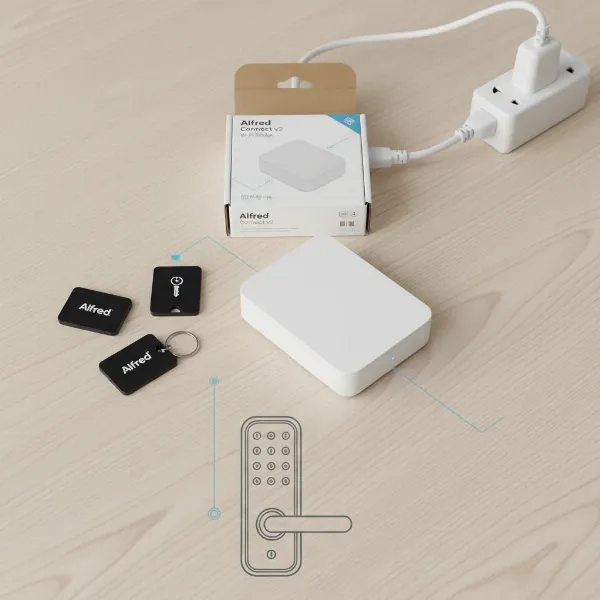
A smart lock offers unparalleled convenience and enhanced security, transforming the way we access and protect our homes. However, few things are as frustrating as a smart lock deadbolt that repeatedly jams, leaving you struggling at your doorstep or questioning your home’s security. When your smart lock begins to stutter or refuse to operate smoothly, it signals a deeper issue that needs attention. Don’t let a stubborn deadbolt compromise your peace of mind or the benefits of modern home automation. This comprehensive guide will walk you through the common culprits behind smart lock jamming and provide practical, step-by-step solutions to restore your lock to perfect working order.
Why Your Smart Lock Deadbolt Keeps Jamming
|
Our Picks for the Best Smart Lock in 2026
As an Amazon Associate I earn from qualifying purchases.
|
||
| Num | Product | Action |
|---|---|---|
| 1 | eufy Security Smart Lock C220, Fingerprint Keyless Entry Door Lock, Built-in Wi-Fi, App Remote Control, Front Door Smart Deadbolt, IP53 Waterproof, 8-Months Battery, Nickel |

|
| 2 | TEEHO TE001 Keyless Entry Door Lock with Keypad - Smart Deadbolt Lock for Front Door with 2 Keys - Auto Lock - Easy Installation - Satin Nickel |
|
| 3 | Philips Wi-Fi Door Lock, WiFi Smart Lock Keyless Entry Deadbolt for Front Door, Compatible with Alexa & Google Assistant, Remote Control, Built-in WiFi, APP Fingerprint Passcode Unlock, Auto Locking |
|
| 4 | TEEHO TE001 Keyless Entry Door Lock with Keypad - Smart Deadbolt Lock for Front Door with 2 Keys - Auto Lock - Easy Installation - Oil-Rubbed Bronze |
|
| 5 | Philips Wi-Fi Door Lock, WiFi Smart Lock Keyless Entry Deadbolt for Front Door, Remote Control, Built-in WiFi, APP Fingerprint Passcode Unlock, Auto Locking |
|
| 6 | ULTRALOQ U-Bolt Pro WiFi Smart Lock with Door Sensor, 8-in-1 Keyless Entry Door Lock with Fingerprint ID, App Remote Control, Built-in WiFi Keypad Deadbolt, Auto Unlock, IP65 Waterproof, Easy Install |
|
| 7 | Electronic Passwords Keyless Entry Door Locks Smart Deadbolt Metal Lock Auto Time Delay Locking Secure Durable Low Battery Alert Type-C Port for Emergency Charging |
|
| 8 | Schlage Encode Smart WiFi Deadbolt Lock for Front Door - Keyless Entry with App or Touchscreen - Works with Alexa, Hey Google, & Airbnb - Create Codes for Guests - Matte Black |
|
| 9 | TEEHO TE001 Keyless Entry Door Lock with Keypad - Smart Deadbolt Lock for Front Door with 2 Keys - Auto Lock - Easy Installation - Matte Black |
|
| 10 | eufy Security Smart Lock C220, Fingerprint Keyless Entry Door Lock, Built-in Wi-Fi, App Remote Control, Front Door Smart Lock Deadbolt, 8Months Battery, Reliable Power, IP53 Waterproof, BHMA Grade 3 |
|
Understanding the root cause of a jamming deadbolt is the first step toward a lasting solution. Smart locks, while advanced, rely on both electronic precision and mechanical harmony to function correctly. When either of these elements is compromised, jamming can occur.
One of the most frequent offenders is low battery power. Smart locks are powered by batteries, and as their charge diminishes, the motor may lack the necessary torque to fully extend or retract the deadbolt, leading to incomplete cycles and jamming errors.
Misalignment between the door, lock, and strike plate is another prevalent issue. Over time, houses settle, doors warp slightly, or hinges can loosen, causing the deadbolt to scrape against the strike plate or the door frame. This friction can prevent the bolt from smoothly entering or exiting its receiving hole. Similarly, if the strike plate hole itself isn’t deep enough or wide enough, the deadbolt can bind, especially if it cannot fully extend into the frame.
Mechanical obstructions or wear and tear can also play a significant role. Accumulation of dirt, dust, grime, or even minor rust within the lock mechanism can impede the smooth movement of internal components. Sometimes, the internal motor or gears within the smart lock might develop a fault, leading to erratic operation or outright jamming.
Finally, calibration or software glitches can cause a smart lock to misinterpret its position or the required travel distance for the deadbolt. An incorrect initial calibration, or outdated firmware, can lead to the lock attempting to extend or retract the bolt improperly, resulting in a jam. In some instances, incorrect installation, such as using the wrong adapter for your deadbolt’s tailpiece, can also contribute to consistent jamming.
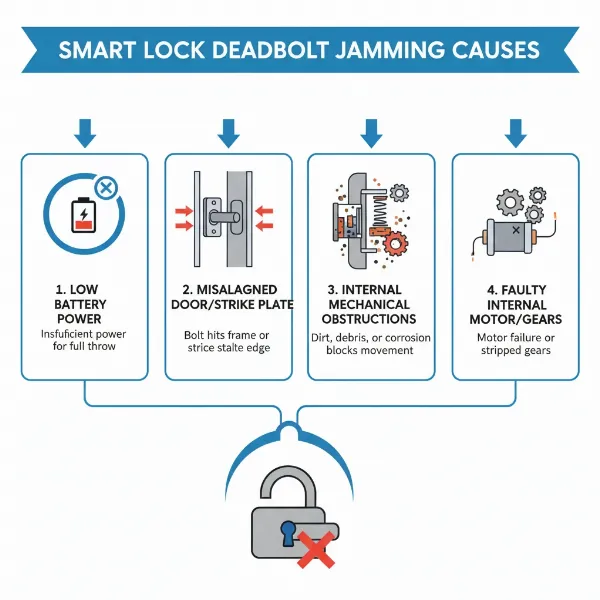 Diagram showing common reasons for smart lock deadbolt jamming, including battery, misalignment, debris.
Troubleshooting Steps: A Step-by-Step Guide to Unjam Your Smart Lock
When your smart lock deadbolt starts jamming, a systematic approach to troubleshooting can help you identify and resolve the problem efficiently. Before you panic, try these steps.
Step 1: Check and Replace Batteries
This is often the simplest fix. Many smart lock issues, including jamming, stem from insufficient power.
- Remove the battery cover and carefully inspect the batteries.
- Replace old batteries with fresh, high-quality alkaline batteries. Avoid using rechargeable batteries unless specifically recommended by the manufacturer, as they can sometimes provide inconsistent power levels.
- Ensure the battery contacts are clean and properly aligned. Sometimes, a quick clean with a cotton swab can improve conductivity.
- Test the lock to see if the issue is resolved.
Step 2: Manually Operate and Inspect for Obstructions
If the batteries aren’t the issue, it’s time to get hands-on.
- Try to manually operate the deadbolt from both the inside and outside using the physical key or thumb turn. If it’s difficult to turn, or feels gritty, this points to a mechanical issue.
- Inspect the deadbolt and the strike plate hole for any visible debris, dirt, rust, or physical obstructions. Use a flashlight if needed.
- Clean any visible obstructions using a small brush, compressed air, or a dry cloth.
Step 3: Recalibrate Your Smart Lock
Many smart locks have a self-calibration feature that helps them learn the door’s locking mechanism. This is particularly useful if the lock was installed with the door open or if the door has shifted.
- Refer to your smart lock’s user manual for specific recalibration instructions, as this process varies by brand.
- Typically, you’ll access a “Calibration” or “Handing” setting within the lock’s menu or its companion app.
- Ensure the door is fully closed when performing the calibration. The lock will often cycle through locking and unlocking to learn the correct throw distance.
- For some specific models, like older August Smart Locks, you might need to hold the lock upright during recalibration, while August Wi-Fi Smart Locks can be recalibrated flat.
Step 4: Address Door and Strike Plate Misalignment
Misalignment is a very common cause of jamming. Even a slight shift can prevent the deadbolt from engaging smoothly.
Identify the Contact Point
- Apply a small amount of a sticky substance like lipstick, chalk, or even smooth peanut butter to the end of the deadbolt.
- Close the door gently and allow the deadbolt to engage with the strike plate naturally, without forcing it.
- Open the door and inspect the strike plate for a mark left by the substance. This mark will show you exactly where the deadbolt is making contact.
Adjust the Strike Plate
- If the mark indicates the deadbolt is hitting the top, bottom, or side of the strike plate opening, loosen the screws on the strike plate.
- Gently shift the strike plate in the necessary direction (up, down, or sideways) to align it better with the deadbolt.
- Retighten the screws and test the lock. Repeat if necessary until the deadbolt slides freely.
Deepen or Widen the Strike Plate Hole
- If the deadbolt hits the edge of the hole or doesn’t fully extend (ideally at least 1 inch deep), the hole might need modification.
- Using a rotary tool (like a Dremel) with a carbide burr bit, a wood chisel, or a file, carefully enlarge or deepen the strike plate hole as needed.
- Proceed slowly and test frequently to avoid removing too much material. The goal is a smooth, unobstructed path for the deadbolt.
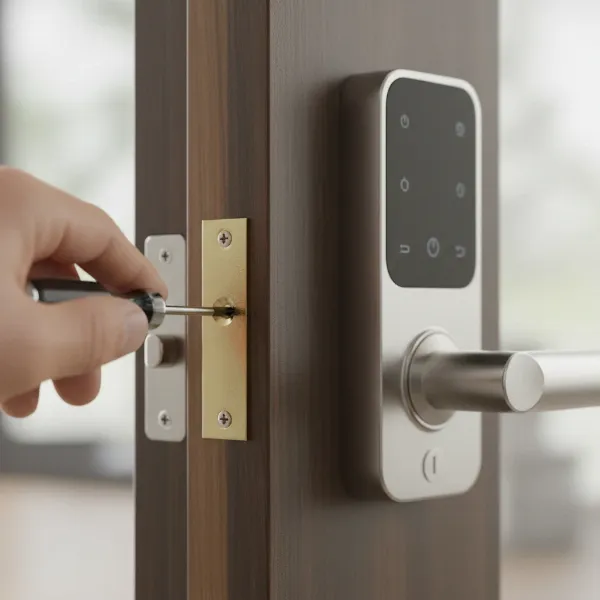 Person adjusting a door strike plate for smart lock alignment, using a screwdriver.
Step 5: Lubricate the Deadbolt Mechanism
Friction can cause significant issues. Lubrication can help internal components move smoothly.
- Use a graphite-based lubricant specifically designed for locks. Avoid oil-based lubricants as they can attract dust and grime, worsening the problem over time.
- Spray a small amount into the keyway (if applicable) and directly onto the deadbolt mechanism itself, particularly any moving parts you can access after removing the lock’s interior cover.
- Operate the lock manually several times to distribute the lubricant evenly.
Step 6: Perform a Motor Reset (if applicable)
Some smart lock models, like those from August, allow for a motor reset which can reorient the internal motor if it’s struggling.
- Consult your manufacturer’s guide for instructions on how to perform a motor reset for your specific model.
- This typically involves removing the lock from its mounting plate and rotating the thumb turn or tailpiece manually in the opposite direction it usually turns, often until you hear the motor whir.
Step 7: Update Firmware and App
Software issues can sometimes manifest as mechanical problems.
- Check your smart lock’s companion app for any available firmware updates for the lock itself. Keeping your device’s software up-to-date can resolve known bugs and improve performance.
- Ensure your smartphone app is also the latest version.
Step 8: Tighten Mounting Screws
Loose mounting screws on the smart lock unit or the strike plate can contribute to instability and misalignment.
- Use a screwdriver to ensure all screws securing the smart lock components to the door and the strike plate to the frame are snug. Do not overtighten, as this can strip screws or damage the lock housing.
Preventative Measures to Avoid Future Jams
An ounce of prevention is worth a pound of cure, especially when it comes to your home security. By adopting a few simple maintenance habits, you can significantly reduce the likelihood of your smart lock deadbolt jamming again.
- Regular Battery Checks: Make it a routine to check and replace your smart lock batteries every 6-12 months, or immediately if you notice any sluggishness in operation. Don’t wait for a low battery warning.
- Routine Cleaning and Lubrication: Periodically clean around the deadbolt and strike plate to remove dust and debris. Apply a graphite-based lubricant every year or whenever you notice the lock isn’t as smooth as it should be.
- Ensuring Proper Installation: If you’re installing a new smart lock, take extra care to ensure the deadbolt and strike plate are perfectly aligned and the strike plate hole is sufficiently deep (at least 1 inch). A proper initial installation minimizes future headaches.
- Keeping Software Updated: Regularly check for and install firmware updates for your smart lock and its companion app. These updates often include bug fixes and performance improvements that can prevent operational issues.
- Door and Frame Maintenance: Pay attention to the condition of your door and frame. Address any warping, sagging hinges, or loose door frames promptly. A well-maintained door ensures the smart lock operates under optimal conditions.
When to Call a Professional Locksmith
While many smart lock jamming issues can be resolved with DIY troubleshooting, there are times when professional help is essential. If you’ve tried all the steps above and your smart lock deadbolt continues to jam, or if you suspect internal mechanical damage, it’s time to call a qualified locksmith or contact the smart lock manufacturer’s support. Forcing a jammed smart lock can cause further damage to its intricate electronic and mechanical components, leading to more costly repairs or even a full replacement. A professional can diagnose complex internal faults, assess door and frame integrity, and perform specialized repairs that ensure your smart lock functions flawlessly and securely.
Conclusion
A smart lock deadbolt that jams is more than just an inconvenience; it’s a security concern. By systematically addressing common causes like low batteries, misalignment, mechanical issues, and software glitches, you can often restore your smart lock’s reliability and smooth operation. Regular maintenance and proactive care are key to ensuring your smart lock remains a dependable guardian of your home, offering seamless access and robust protection for years to come. Don’t let a minor malfunction escalate into a major security headache – take control of your smart lock’s performance today. What steps will you take to keep your smart lock performing its best?
Frequently Asked Questions
Why does my smart lock click but not lock?
If your smart lock clicks but fails to lock, it often indicates the motor is trying to engage but cannot complete the deadbolt’s throw. This can be due to low battery power, significant misalignment of the deadbolt with the strike plate, or a mechanical obstruction preventing the bolt from extending fully into the door frame. Try replacing batteries or checking for physical interference.
How do I reset my smart lock’s motor?
Motor reset procedures vary by brand, but typically involve accessing a specific setting within the smart lock’s app or manually manipulating the interior thumb turn or tailpiece while the lock is removed from the door. This process helps the lock reorient its internal mechanism. Always consult your smart lock’s user manual for precise, model-specific instructions.
What kind of lubricant should I use for my smart lock?
For smart locks and any deadbolt mechanism, it’s crucial to use a graphite-based lubricant. Unlike oil-based lubricants, graphite won’t attract dust and dirt, which can gum up the internal mechanisms and worsen jamming over time. Apply it sparingly to the keyway and any accessible moving parts of the deadbolt.
Can a misaligned door cause my smart lock to jam?
Absolutely. Door misalignment is one of the most common reasons a smart lock deadbolt will jam. If the door has shifted, warped, or if the strike plate on the door frame is not perfectly aligned with the deadbolt, the bolt will scrape or catch, preventing it from extending or retracting smoothly. Adjusting the strike plate is often the solution.